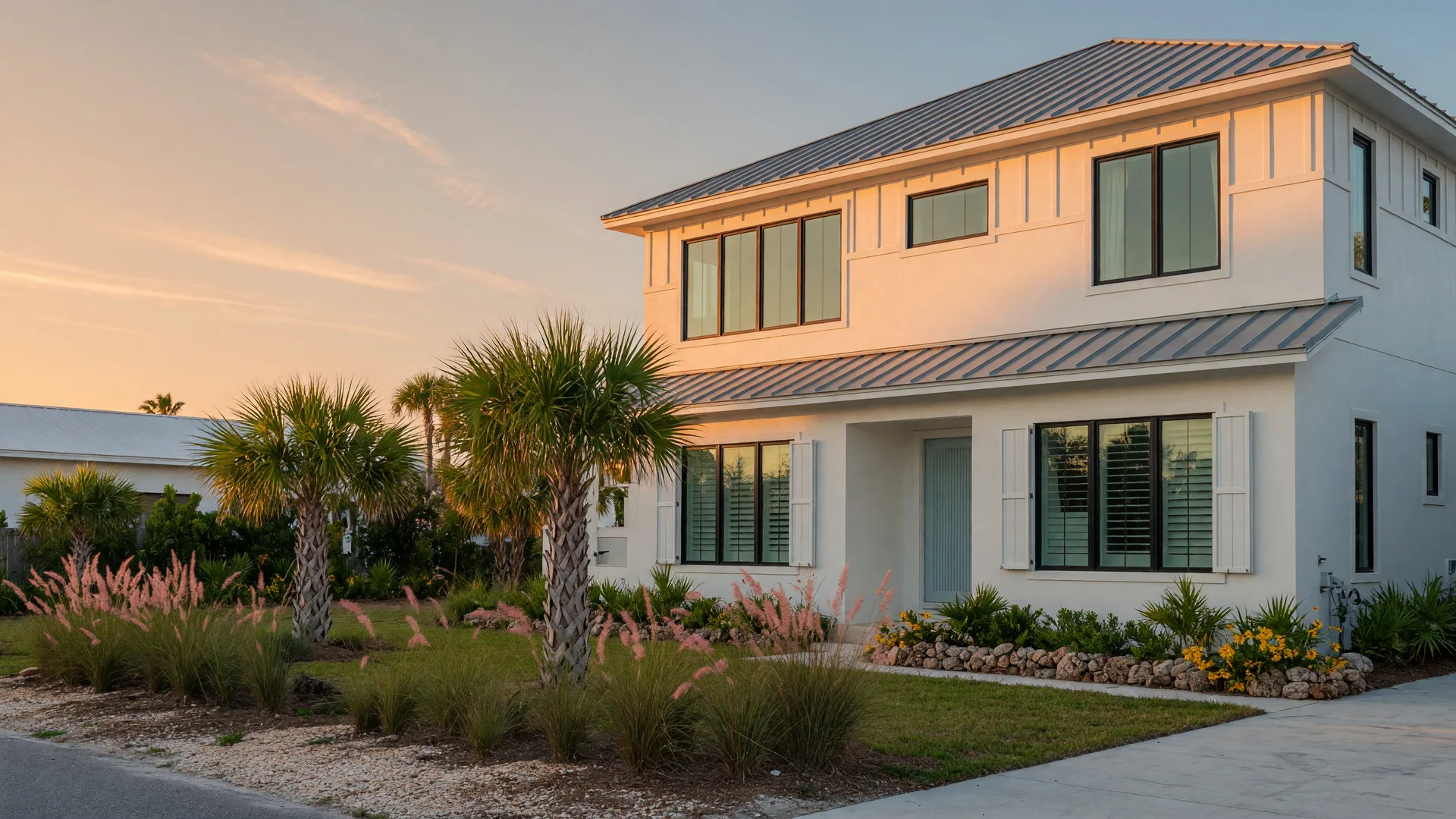
If you own a home in Florida, you may be sitting on more equity than you realize. American homeowners with mortgages held a record amount of home equity in 2026, with the average mortgaged homeowner holding well over $300,000. When you need cash for a renovation, debt consolidation, or an emergency, that equity is often your cheapest source of money.
But there are two very different ways to tap it: a home equity line of credit, or HELOC, and a cash-out refinance. They sound similar, and people use the words interchangeably, but they are not the same product at all. Choosing wrong can cost you thousands and, in Florida, can even affect your flood insurance requirements.
Let me walk you through both options clearly, so you can decide which one actually fits your situation. Whether your home is in Miami-Dade, Palm Beach, Broward, or down in the Keys, the basics apply, and I will call out the Florida-specific details you need to watch.
Why Florida Homeowners Are Tapping Equity in 2026
Home values across Florida rose sharply in recent years, which pushed the average loan-to-value ratio down and the average homeowner's equity up. In plain terms, most owners owe far less than their homes are worth, and that gap is real money they can use.
At the same time, borrowing costs on a full refinance have stayed in the high single digits in 2026. That combination, lots of equity plus less attractive refi rates, has made HELOCs far more popular with Florida homeowners than they were a few years ago. Understanding the difference is the first step to using your equity well instead of paying too much for it.
HELOC vs. Cash-Out Refinance: The Core Difference
The short version is this: a HELOC is a second loan on top of your existing mortgage, and a cash-out refinance replaces your entire mortgage with a brand new one.
What Is a HELOC?
A HELOC is a revolving line of credit secured by your home, kind of like a credit card that uses your equity as collateral. You draw money when you need it, up to your approved limit, during a draw period that usually lasts about 10 years. You only pay interest on what you actually borrow, and the rate is typically variable.
Because it is a second lien, your existing first mortgage and its interest rate stay exactly as they are. If you locked in a low rate in 2020 or 2021, a HELOC lets you borrow against your equity without giving that rate up.
What Is a Cash-Out Refinance?
A cash-out refinance pays off your current mortgage and replaces it with a new, larger loan. You receive the difference between the two as a lump sum of cash, and your new loan carries today's interest rate on the entire balance, not just the part you took out.
The benefit is that you consolidate everything into one fixed-rate loan, and you can often get a lower rate on the whole thing than a HELOC line would charge. The tradeoff is that your whole mortgage resets to a new 30-year term and a new rate, and closing costs run higher because it is a full refinance with title work.
Current Rates: HELOC vs. Cash-Out Refinance in 2026
Numbers move every week, so treat these as ballpark figures for late 2026, not quotes. National average HELOC rates dipped to around 7% in September 2026 after starting the year in the 8% to 8.5% range. Cash-out refinance rates on a 30-year fixed loan were running in the high 6% to low 7% range, with 15-year options a bit lower.
Here is the part most people miss: a HELOC rate is only on the money you draw, while a cash-out refinance rate applies to your entire remaining mortgage balance. If you owe $250,000 and only need $40,000, refinancing the whole $290,000 at today's rate can cost more in total interest than a HELOC that charges a slightly higher rate on just the $40,000 you use. That is why the right choice depends on how much you need and what your current rate is, not just on which rate looks lower on paper.
When a HELOC Makes Sense in Florida
- You locked in a low first-mortgage rate. If your rate is 3% or 4% and you refinance to today's 6% to 7% range, your monthly payment on the existing balance jumps. A HELOC protects that low rate.
- You need ongoing or unpredictable access to cash. A draw line is flexible. You use it for a while, pay it back, and borrow again.
- You want lower upfront costs. HELOCs generally carry far smaller closing costs than a full refinance with title insurance.
- You are building a hurricane-repair fund. Many Florida owners open a HELOC during calm periods so it is ready before a storm, because lenders tighten their standards after major events.
When a Cash-Out Refinance Makes Sense in Florida
- You need a large, one-time lump sum. Big renovations, debt consolidation, or a major purchase are good candidates for a single check.
- Your current rate is already near today's market. If you are not giving up a low rate, the cash-out refinance may give you a lower rate on the whole balance than a HELOC line would.
- You want the stability of a fixed payment. A fixed-rate cash-out refinance removes the uncertainty of a variable HELOC rate that can climb over time.
The Big Florida Question: What About Taxes and Your Homestead?
This is the part that surprises a lot of Florida homeowners, and it is good news. Neither a HELOC nor a cash-out refinance triggers a property tax reassessment or resets your assessed value. Your homestead exemption and your Save Our Homes cap, which limits annual assessed value increases to 3%, follow your homestead status, not your loan. Borrowing against your equity does not make your property taxes go up.
The exception is if the property is not your homestead. Investment and second homes in Florida can carry property taxes two to three times higher than a primary residence with a homestead exemption. If you are borrowing against a rental or vacation property, run those numbers carefully before you commit.
Flood Insurance and Your Home Equity Loan
Here is a Florida-specific catch that trips people up. Taking out a HELOC or a home equity loan can trigger a flood insurance requirement even when your original mortgage did not require one. The new loan causes the lender to run a current flood zone determination, and federally regulated lenders cannot make or increase a loan secured by a home in a FEMA Special Flood Hazard Area, zones like AE and VE, without flood insurance.
The same rule applies to a cash-out refinance. That is one more reason to factor insurance into your decision, because flood coverage adds real money in coastal markets like the Keys, Miami-Dade, and Palm Beach. It is not a reason to avoid borrowing, just a cost to budget for before you sign.
The 80% Rule: How Much Can You Borrow?
In most cases, lenders cap your combined loan-to-value ratio at around 80%. That means the total of your first mortgage plus your new line or new loan generally cannot exceed 80% of your home's appraised value. If your home is worth $500,000 and you owe $250,000, you have room to borrow up to roughly $150,000 before hitting that 80% ceiling.
Your exact limit depends on your credit, your income, and the lender's guidelines, and there is no substitute for running the real numbers on your own property.
I believe an educated buyer makes better financial decisions. My job isn't to sell you a mortgage. It's to help you understand your options, avoid costly mistakes, and choose the financing strategy that truly fits your goals.
Austin Edwards, Mortgage Loan Originator · NMLS #2639747
How to Decide: A Simple Three-Step Check
Before you pick one, answer these three questions honestly:
- What is my current first-mortgage rate, and what could I get today? If you would be refinancing from a low rate to a higher one, that leans you toward a HELOC.
- How much do I need, and is it one lump sum or ongoing access? A single large amount leans toward cash-out refinancing. Ongoing or uncertain needs lean toward a HELOC.
- Am I factoring in closing costs, flood insurance, and the full loan term? Compare the total picture, not just the advertised rate.
If you are not sure, that is exactly the kind of question I help borrowers work through every day. There is no pressure to decide on the spot, and no one should feel rushed into a home equity product they do not fully understand.
Frequently Asked Questions
What is the difference between a HELOC and a cash-out refinance?
A HELOC is a revolving line of credit secured by your home that leaves your existing first mortgage and its rate untouched. A cash-out refinance replaces your entire mortgage with a new, larger loan and gives you the difference as a lump sum. A HELOC is flexible and lower cost but usually variable rate. A cash-out refinance consolidates everything into one fixed loan but resets your term to today's rates and has higher closing costs.
Does refinancing or a HELOC raise my Florida property taxes?
No. Neither a HELOC nor a cash-out refinance triggers a reassessment or resets your assessed value. Your homestead exemption and Save Our Homes cap follow your homestead status, not your loan. The main exception is non-homesteaded investment or second homes, which can carry property taxes two to three times higher than a primary residence.
Will a HELOC make me buy flood insurance in Florida?
It can. A new HELOC or home equity loan causes the lender to order a current flood zone determination, and if your home sits in a FEMA Special Flood Hazard Area, flood insurance is required. The same rule applies to a cash-out refinance. It is an added cost to budget for in coastal markets.
How much equity can I actually borrow against in Florida?
Most lenders cap combined loan-to-value at around 80%. That means your existing mortgage plus your new line or loan generally cannot exceed 80% of your home's appraised value. Your exact limit depends on your credit, income, and the lender's guidelines, so it is worth running the real numbers on your property.
Is a HELOC or a cash-out refinance better if I have a low mortgage rate?
If you locked in a low rate on your first mortgage, a HELOC is usually the smarter choice because it lets you borrow against your equity without refinancing that low rate away. A cash-out refinance replaces your whole mortgage at today's higher rates, which can raise your payment on the existing balance.
Should I use my home equity for hurricane repairs?
Home equity can be a cost-effective way to fund storm repairs, especially if you hold a low first-mortgage rate. Many Florida owners open a HELOC during calm periods so it is ready before a storm, since lenders often tighten their standards after major events. Talk through your options before an emergency, not during one.

Austin Edwards
Mortgage Loan Originator · NMLS #2639747
Austin helps Florida homebuyers and homeowners understand their mortgage options and make confident financial decisions. He believes an educated borrower makes better choices.
More Resources
For more on managing your mortgage, check out our guides on when refinancing makes sense, escrow shortages and recasting, and Florida homeowners insurance costs. Or reach out to Austin directly with your specific situation.
Have a question? Ask Austin.
Every homeowner's situation is different. If you are weighing a HELOC against a cash-out refinance, Austin would love to talk through your numbers. No commitment, no sales pitch. Just a straight answer.
Ask Austin a QuestionReady to make your home equity work for you?
Whether you are buying a home, refinancing, or deciding between a HELOC and a cash-out loan, Austin can help you understand your options and build a plan that fits your life.