
If you bought your home or last refinanced a couple of years ago, you might be wondering whether today's rates make refinancing worth a second look. It's one of the most common questions I hear from Florida homeowners.
Here is the honest answer: it depends on your situation. Refinancing is not a one-size-fits-all decision. It works well for some homeowners and doesn't make sense for others. This guide walks through the numbers, the options, and the Florida-specific factors you need to consider before making a move.
Where Mortgage Rates Stand Right Now
As of August 2026, 30-year fixed mortgage rates in Florida hover in the range of 6.6% to 6.85%. That's down from the peak near 8% in late 2023, but still a far cry from the historic lows we saw in 2020 and 2021. Fifteen-year fixed rates average around 6.0%. These numbers matter because the single biggest factor in any refinance decision is whether you can meaningfully improve your rate.
Here is a question I ask every client: what rate are you currently paying, and how long do you plan to stay in the home? Those two numbers answer more than any headline ever will.
The Rule of Two: Rate and Time
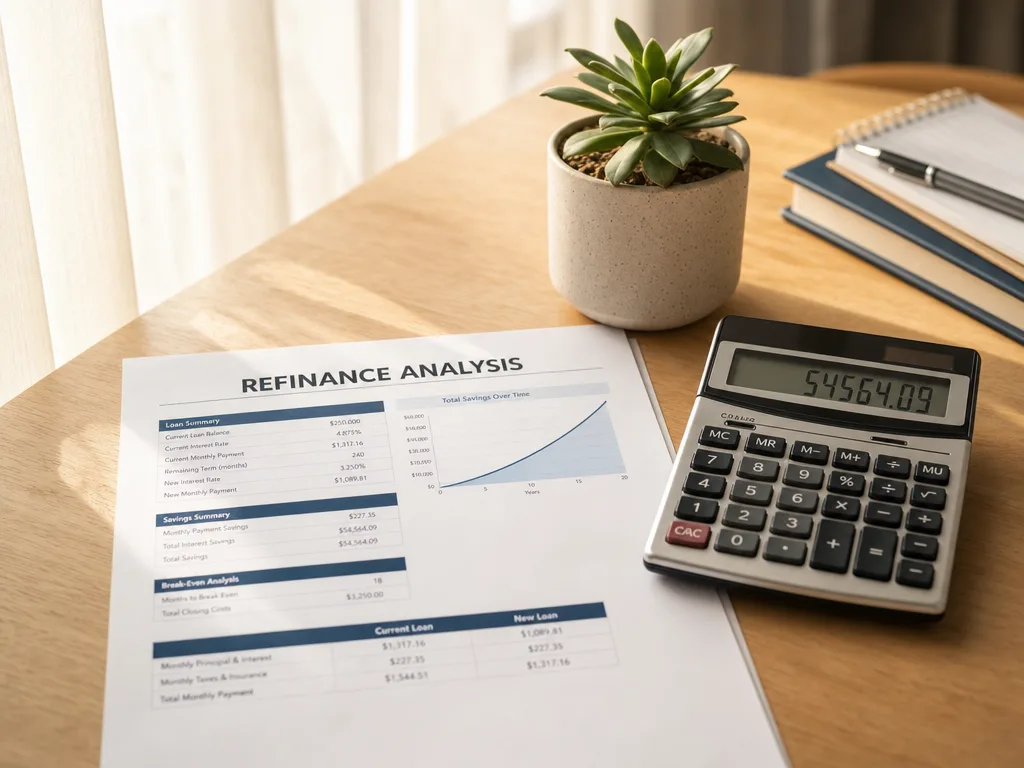
A refinance involves closing costs. Those costs need to be recouped through monthly savings, and that takes time. A common rule of thumb: if you can lower your rate by at least 0.75% to 1% and plan to stay in the home long enough to break even on closing costs, refinancing is worth a serious look.
For example, if your closing costs total $5,000 and refinancing saves you $200 per month, your break-even point is 25 months. If you plan to stay past that point, the savings are real.
If you are selling in two years, refinancing likely doesn't pencil out unless you can find a no-cost refinance or a significantly lower rate with minimal closing costs.
Refinance Options Available to Florida Homeowners
Not all refinances work the same way. Depending on what type of loan you have and what your goal is, one option may serve you better than others.
Rate-and-Term Refinance
This is the most common refinance. You replace your existing mortgage with a new one at a lower rate or a different term. Your loan balance stays roughly the same (plus closing costs rolled in). The goal is to lower your monthly payment, pay off the home faster, or both.
FHA Streamline Refinance
If you already have an FHA loan, the FHA Streamline is one of the simplest ways to lower your rate. No appraisal is required in most cases, documentation is minimal, and the process can close in under 30 days. You do need to have a net tangible benefit, which means your new payment must be lower than your current one.
VA IRRRL (Interest Rate Reduction Refinance Loan)
For Florida veterans and active-duty military, the VA IRRRL is often the easiest refinance available. It requires no appraisal, no credit underwriting in many cases, and reduced documentation. If you currently have a VA loan and rates have dropped since you closed, this is worth a very close look. VA loan rates are also among the most competitive, with rates around 5.85% APR in the current market.
Cash-Out Refinance
If you have built up equity in your home, a cash-out refinance lets you replace your current mortgage with a larger loan and receive the difference in cash. Florida homeowners often use cash-out refinancing for home improvements, including impact windows, storm shutters, or a new roof. These improvements can lower your homeowners insurance premiums, which is a meaningful consideration in Florida.
You can typically access up to 80% of your home's value with a conventional cash-out refinance. VA loans allow up to 100% in some cases.
USDA Streamline Refinance
Homeowners in eligible rural and suburban areas of Florida with USDA loans can access a streamlined refinance with no minimum credit score and no appraisal required in many cases.
Florida-Specific Factors to Consider
Refinancing in Florida comes with unique considerations that homeowners in other states don't always deal with.
Homeowners Insurance
Florida property insurance premiums have risen significantly over the past several years. When you refinance, your lender will require a new homeowners insurance policy. If your current premium has jumped since you bought, that higher cost will be factored into your new monthly payment. Make sure your estimated payment accounts for the current insurance rate, not what you paid two years ago.
Flood Insurance
If your home is in a flood zone, flood insurance is required for any mortgage transaction, including refinancing. Flood zone maps can change over time. Your property may be in a different zone than it was when you originally bought. This is something to check early in the process so there are no surprises.
Home Appraisals in Florida's Market
Home values have appreciated significantly in many Florida markets from the Keys to Palm Beach to Miami-Dade. That is good news if you need an appraisal for a rate-and-term or cash-out refinance. Higher values mean more equity and potentially better terms. However, appraisals can also vary depending on recent comparable sales, so it is important not to assume your home is worth what you think without data to back it up.
When Refinancing Probably Does Not Make Sense
I want to be straightforward about this. There are situations where refinancing is not the right move.
- You are selling within two years. Unless you find a no-cost refinance, you likely won't recoup the closing costs before you move.
- Your credit score has dropped. A lower score can mean a higher rate, which defeats the purpose of refinancing.
- You are extending the loan term to lower the payment. A lower monthly payment that adds years of interest may cost you more in the long run.
- You have a very small balance remaining. The fixed closing costs may make the math impossible to justify.
The best refinance is the one where the numbers are clear, the break-even makes sense for your timeline, and you understand exactly what you are signing up for. If any of those pieces are fuzzy, slow down and ask more questions.
Austin Edwards, Mortgage Loan Originator
How to Run the Numbers Yourself
Before you apply for any refinance, gather these pieces of information:
- Your current loan balance and interest rate
- Your current monthly principal and interest payment
- About how much equity you have in the home
- Your credit score (check a free source like annualcreditreport.com)
- Your homeowners insurance premium and whether you carry flood insurance
- How long you realistically plan to stay in the home
With those numbers, a mortgage professional can show you different scenarios. You do not need to know which option is best before you call. That is what the conversation is for.
Frequently Asked Questions
How much does refinancing cost in Florida?
Closing costs on a refinance in Florida typically range from 2% to 5% of the loan amount. This includes the appraisal, title search, lender fees, recording fees, and prepaids for taxes and insurance. A no-cost refinance trades closing costs for a slightly higher rate.
Can I refinance if my credit score is below 620?
It is more difficult, but not impossible. FHA loans may allow refinancing with scores as low as 580. VA loans do not have a minimum credit score, though individual lenders may set their own requirements. Improving your score before applying can open up better options.
How long does a refinance take in Florida?
A typical refinance takes 30 to 45 days from application to closing. Streamline programs like FHA Streamline or VA IRRRL can close in as little as two to three weeks because they require less documentation.
Do I need an appraisal to refinance?
It depends on the loan type. FHA Streamline and VA IRRRL refinances typically do not require an appraisal. Most conventional rate-and-term refinances do require one. If you have significant equity, some lenders may offer appraisal waivers.
Can I refinance with the same lender or should I shop around?
You can refinance with your current lender or shop for a new one. Always compare at least two to three loan estimates. Your current lender may offer a streamlined process, while a different lender may offer a lower rate or lower fees. The estimate is the only real way to compare.

Austin Edwards
Mortgage Loan Originator · NMLS #2639747
Austin helps Florida homeowners understand their mortgage options and make confident financial decisions. He believes an educated borrower makes better choices.
More Resources
Looking for more mortgage guidance? Browse the blog index for the latest articles, or reach out to Austin directly with your questions.
Have a question? Ask Austin.
Every borrower's situation is different. If something in this article raised a question about your own situation, Austin would love to hear from you. No commitment, no sales pitch. Just a straight answer.
Ask Austin a QuestionThinking about refinancing?
Austin will walk through the numbers with you, explain your options, and help you decide whether refinancing makes sense for your situation.