If you're shopping for a home in Florida in 2026, the single biggest number that might surprise you isn't the sale price or the interest rate. It's the homeowners insurance premium.
I talk to buyers every week who find a house that fits their budget, run the payment numbers, and then discover that insurance adds $400, $600, or even $800 per month to their housing costs. That changes everything about what they can afford.
Here's the good news: Florida's insurance market is finally starting to turn around. After years of skyrocketing premiums and carriers leaving the state, reforms are working. Rates are coming down in 2026 for the first time in well over a decade. But the picture is still complicated, and understanding it is essential if you want to make a smart homebuying decision in Florida right now.
Where Florida Homeowners Insurance Stands in 2026
Florida has long held the unwelcome title of the most expensive state for homeowners insurance. The national average premium is roughly $2,950 per year. Florida's statewide average varies depending on who's calculating it, but it lands somewhere between $5,700 and $8,400 annually. In the Florida Keys, it can exceed $14,800 per year. Along the South Florida coast from Miami-Dade through Broward and Palm Beach, you're looking at $8,000 to $10,000 or more.
Compare that to inland areas like Central Florida, where premiums may run closer to $2,100 per year. Location within the state matters more than almost any other factor.
For a $400,000 home in coastal South Florida, a $700 monthly insurance payment added to principal, interest, and taxes can push your total housing cost well beyond what a standard mortgage calculator predicts. That's why I tell every buyer: do not fall in love with a mortgage payment until you've factored in the real insurance cost for that specific property.
The Big Shift: Rates Are Finally Dropping
For the first time since 2015, Florida homeowners are seeing real rate relief. Citizens Property Insurance, the state-backed insurer of last resort, approved an average rate decrease of 8.7% statewide for 2026. Multiple private carriers followed suit. State Farm filed for a 10% reduction. Florida Peninsula proposed 8.4% cuts. Patriot Select planned 11.3% reductions. Across 51 of Florida's 67 counties, rates are trending down.
The number of policies at Citizens has dropped from a peak of 1.41 million in October 2023 to roughly 336,000 today. That's a 76% reduction, which tells you private carriers are coming back into the market and competing for business. That's a healthy sign.
What's driving this change? Landmark tort reform passed in 2022 and 2023 eliminated one-way attorney fees and banned the assignment of benefits (AOB) for new policies. Those two practices had created a litigation environment where insurers were essentially forced to settle inflated claims or pay massive legal fees regardless of merit. A 2026 analysis by the Perryman Group found that these reforms made insurance costs 14.5% lower than they would have been without them.
Insurance isn't just a line item on your closing disclosure. It's a fundamental part of your monthly housing budget, and in Florida, it can make or break your affordability.
Austin Edwards, Mortgage Loan Originator · NMLS #2639747
What Recent Legislation Means for Homebuyers
The 2026 Florida legislative session brought more consumer-friendly changes. One of the most practical is a new law that prohibits insurers from refusing coverage solely based on the age of your roof. If the roof is in good condition and passes inspection, carriers can no longer deny a policy or impose a surcharge just because it's more than 15 years old. That's a meaningful change for anyone buying an older home.
Other 2026 changes include a new administrative dispute resolution process through the Division of Administrative Hearings, which gives homeowners an independent path to challenge a denied claim without needing to go straight to court. And Citizens can no longer issue a commercial policy if a private carrier is willing to write one, which helps keep private insurers competitive.
For homebuyers, the practical takeaway is this: the market is improving, but you still need to do your homework. Don't assume insurance costs will be affordable just because the headlines say rates are dropping. Your specific property, location, roof condition, and wind mitigation features will determine your actual premium.
How Insurance Fits Into Your Mortgage
Lenders don't just check your credit score and income. Your total housing payment everything including principal, interest, taxes, and insurance (PITI) has to fit within your debt-to-income ratio. Most conventional loans want your total housing payment at or below 28% of your gross monthly income, and your total monthly debts including the housing payment at or below 43%.
Here's where it gets tricky. A buyer might qualify for a $450,000 home based on principal and interest alone, but once you add $8,000 per year in insurance ($667/month), the total payment pushes their DTI over the limit. That buyer might need to target a $400,000 home instead, or look at properties in areas with lower insurance costs.
This is why I always recommend getting real insurance quotes before you make an offer. A quick online estimate from a national calculator won't capture what a local Florida carrier will charge for that specific address. Work with a local insurance agent who knows the Florida market and can give you accurate numbers.
Flood Insurance: The Other Piece of the Puzzle
Standard homeowners insurance does not cover flood damage. If the property lies in a FEMA-designated flood zone, your lender will require a separate flood insurance policy. Even if it's not required, many Florida buyers choose to carry flood insurance anyway especially along the coast and near major waterways.
Flood insurance through the National Flood Insurance Program (NFIP) typically runs $700 to $2,000 per year for most properties, but can be much higher in coastal high-hazard zones. Private flood insurance is also an option and may offer better rates for lower-risk properties. This is another cost that needs to be in your budget, especially if you're looking at homes in the Keys, Miami-Dade, Broward, or Palm Beach where flood risk is a real factor.
What Homebuyers Should Do Right Now
1. Get Insurance Quotes Before You Make an Offer
This is the single most important piece of advice I can give. Once you've narrowed down a few properties or neighborhoods, ask a local insurance agent to quote each one. The premium difference between two similar homes can be hundreds of dollars per month based on location, roof age, and wind mitigation features.
2. Look for Wind Mitigation Features
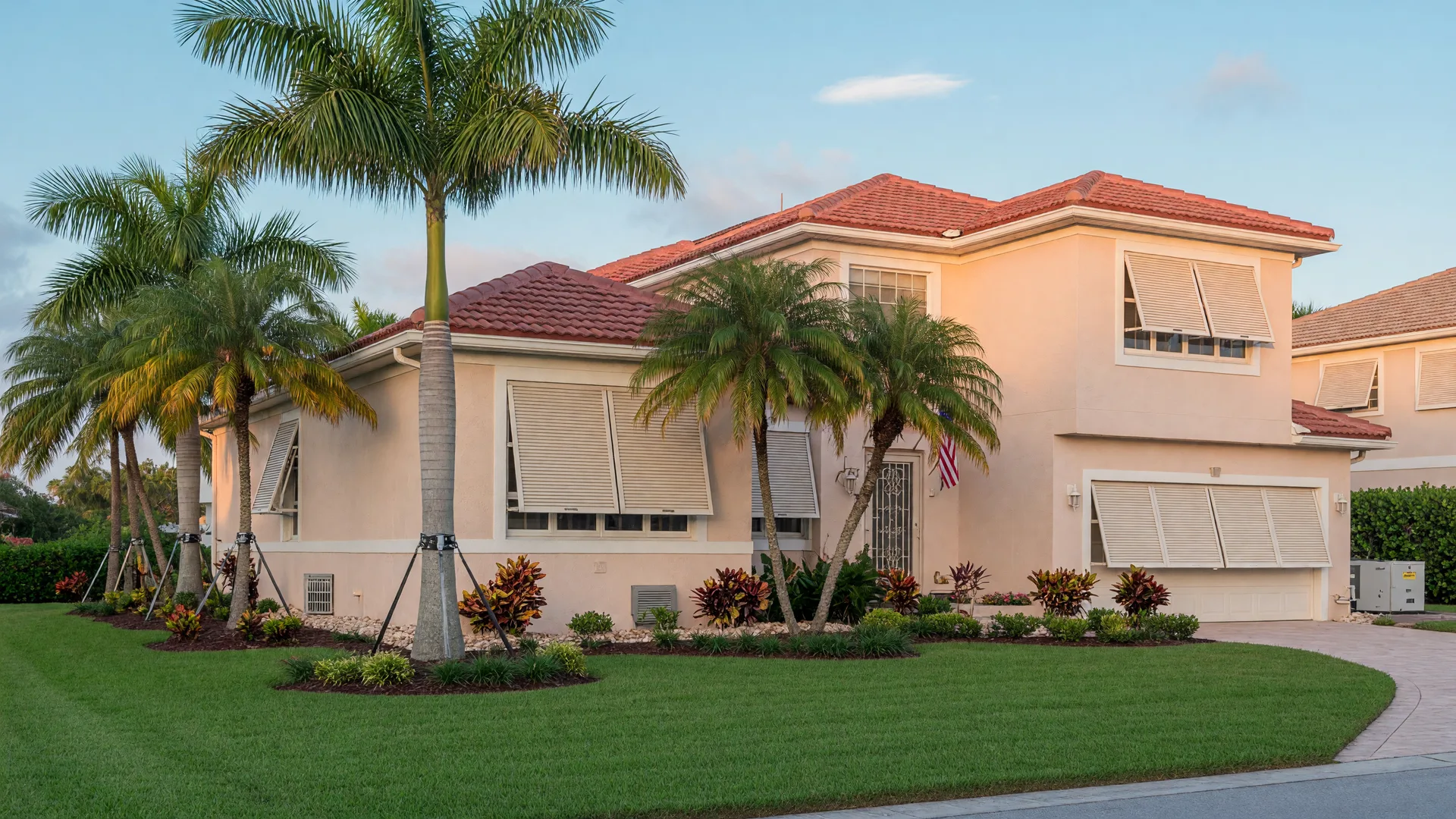
Florida homes built or renovated after 2002 generally follow stricter building codes that include hurricane-resistant features. Impact-resistant windows, reinforced garage doors, hip roofs, and proper roof-to-wall connections all qualify for wind mitigation credits that can lower your premium by 15% to 30%. When you're touring homes, ask about these features. A home with a newer roof and modern hurricane protection can save you significantly on insurance.
3. Factor Insurance Into Your True Budget
When you use a mortgage calculator, add the real insurance premium not a national average. In coastal Florida, budget $500 to $800 per month for insurance on a $350,000 to $500,000 home. Inland, you may see $200 to $350 per month. Include flood insurance separately if applicable. Then add property taxes (typically 1% to 1.5% of the home's value annually in most Florida counties), HOA dues, and maintenance. The total is what determines whether you can comfortably afford the home.
4. Ask About Insurance History
A home that has had multiple insurance claims in recent years may be harder to insure, even with the market improving. Your real estate agent can ask the seller for their insurance loss history. This is standard practice, and it gives you a heads up if a property has a pattern of water damage, roof claims, or other issues that would make carriers hesitant.
5. Work With a Lender Who Understands Florida
Insurance is a Florida-specific issue that many out-of-state lenders don't fully account for. A local lender who works in Florida every day knows how to structure your loan with realistic insurance costs, which carriers are writing in your area, and how to help you get pre-approved for a price range that actually works with your total housing payment. That's the kind of guidance that saves you from falling in love with a home you can't afford to insure.
Frequently Asked Questions
How much does homeowners insurance cost in Florida in 2026?
Statewide averages range from roughly $5,700 to $8,400 annually depending on the source and coverage level. However, costs vary dramatically by location. The Florida Keys average around $14,800 per year, coastal South Florida runs $8,000 to $10,000, and central inland areas can be as low as $2,100. Always get a quote for the specific property you're considering.
Are Florida insurance rates going down in 2026?
Yes, for the first time since 2015. Citizens Property Insurance approved an 8.7% average rate decrease. Multiple private carriers including State Farm (10% reduction) and Patriot Select (11.3% reduction) have also filed decreases. Rates are falling in 51 of Florida's 67 counties. Legislative reforms passed in 2022-2023 are the primary driver.
How does insurance affect my mortgage approval?
Insurance is factored into your debt-to-income ratio as part of your total housing payment. High insurance costs can reduce how much home you qualify for, even if your income and credit are strong. A realistic insurance estimate upfront prevents the unpleasant surprise of discovering the numbers don't work after you've found the perfect home.
Do I need flood insurance to buy a home in Florida?
If the property is in a FEMA-designated flood zone, your lender will require it. Even if it's not required, many Florida homeowners choose to carry flood insurance, especially in coastal areas, near waterways, or during hurricane season. Flood insurance through NFIP typically costs $700 to $2,000 per year for most properties.
How can I lower my homeowners insurance in Florida?
Look for homes with wind mitigation features such as impact-resistant windows, reinforced garage doors, hip roofs, and a newer roof that meets modern building codes. These features qualify for premium discounts of 15% to 30%. A certified wind mitigation inspection can document these features and lower your rate. Also, shop multiple carriers, bundle with auto insurance, and consider a higher deductible.
What about condo insurance? Is it different?
Yes. Condo owners typically only need an HO-6 policy that covers the interior of their unit and personal belongings. The building's master policy covers the structure and common areas. However, rising master policy premiums have led to significant HOA fee increases and special assessments across Florida. Before buying a condo, always check the association's financial health and insurance coverage. We cover this in detail in our condo financing guide for 2026.

Austin Edwards
Mortgage Loan Originator · NMLS #2639747
Austin helps Florida homebuyers navigate the full cost of homeownership, from mortgage rates to insurance and everything in between. He believes an educated buyer makes better financial decisions.
More Resources
For deeper dives on related topics, check out our guides on first-time homebuying in Florida, closing costs explained, and condo financing in 2026. Or reach out to Austin directly with your specific questions.
Have a question? Ask Austin.
Insurance is one of those topics where a real conversation can save you from surprises later. If you're wondering how insurance costs might affect your specific homebuying plan, Austin would be happy to walk through it with you. No pressure, no sales pitch.
Ask Austin a QuestionReady to see your real numbers?
Get pre-approved or schedule a free consultation with Austin. He'll walk through your budget with real insurance estimates, tax data, and a clear picture of what you can afford. No guesswork. Just the facts.