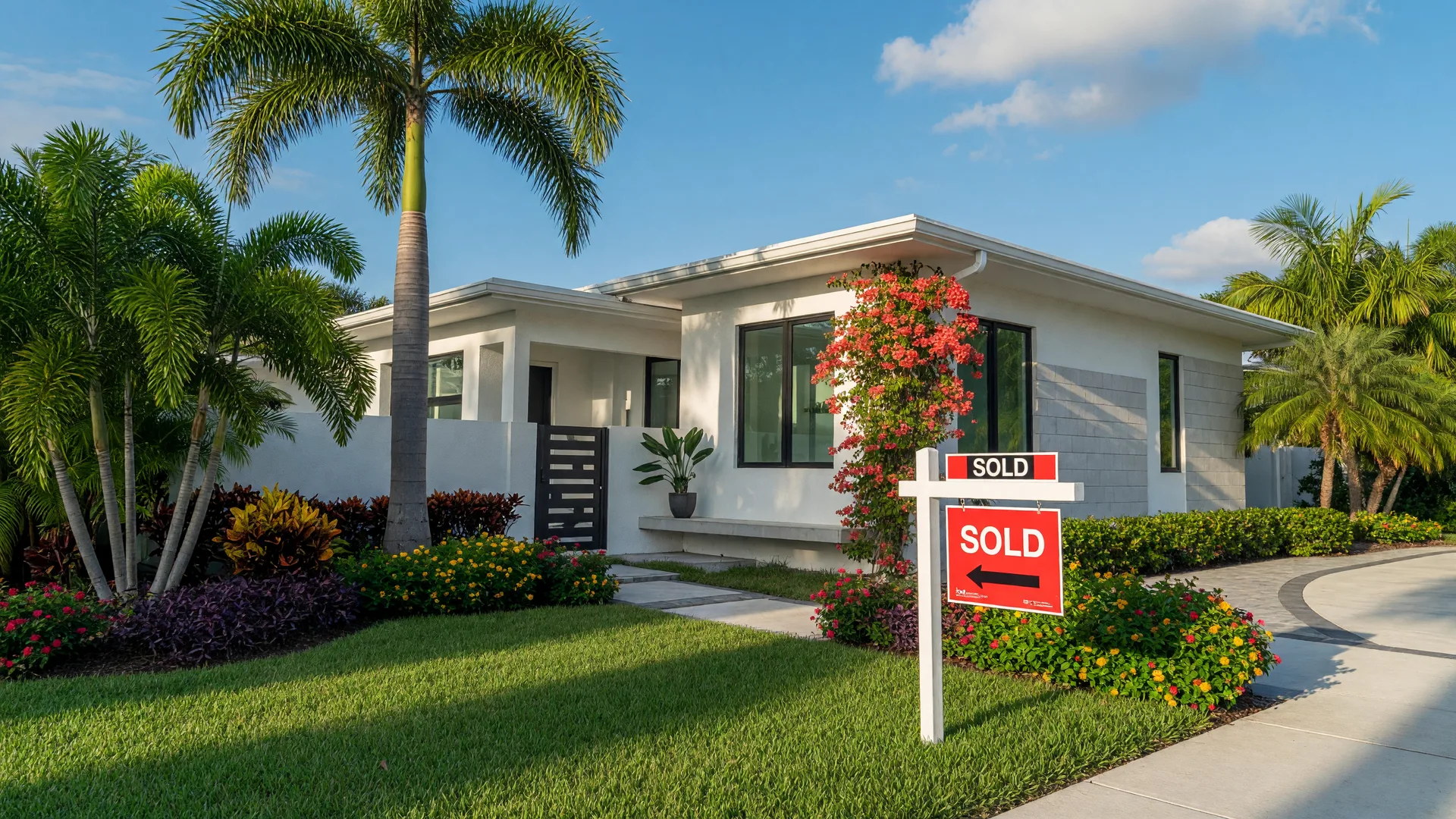
Buying your first home in Florida in 2026 is both exciting and a little intimidating. The market has shifted since the peak pandemic years, and today's landscape brings different opportunities and different challenges than what you might expect.
I believe an educated buyer makes better financial decisions. That's why I wrote this guide: to give you a clear, honest picture of what first-time homebuyers in Florida are facing right now, and how to navigate it with confidence.
This isn't a sales pitch. It's a roadmap. Whether you're looking in Miami-Dade, Palm Beach, Broward, the Florida Keys, or further north, the fundamentals are the same. Let's walk through them.
What the Florida Housing Market Looks Like in 2026
The Florida market has cooled from the red-hot days of 2021 and 2022, but that's not necessarily bad news for buyers. The statewide median price for single-family homes sits around $412,500 to $425,000, with prices holding relatively flat year-over-year. Homes are staying on the market longer about 84 days on average compared to roughly 68 days a year ago and inventory has risen to about 4.7 months of supply.
What does this mean for you? More choices, less pressure, and more room to negotiate. Sellers are more willing to work with buyers on closing costs, repairs, and concessions than they were two or three years ago. If you've been waiting for the market to cool off, this is the environment you've been waiting for.
That said, affordability remains the big story. Mortgage rates have been hovering in the mid-to-high 6% range, and while they're well below the peaks of 2023, they still add hundreds of dollars to a monthly payment compared to the sub-3% rates of 2021. The key is understanding your full numbers, not just the interest rate.
The Three Big Challenges for First-Time Buyers in Florida
1. Homeowners Insurance
This is the single biggest surprise for out-of-state buyers and many first-time Florida residents. Florida homeowners insurance has become expensive averaging $5,800 to $7,200 statewide, and in coastal areas like South Florida, premiums can run $8,000 or more annually. That's $500 to $700 per month baked into your housing costs before even turning on the lights.
When you're pricing homes, always factor in insurance. A house that looks affordable on Zillow may have a total payment that's hundreds more per month than you expect once you add in real insurance quotes. Work with an insurance agent early in the process to get accurate numbers for the properties you're considering.
2. Condo Financing Rules
If you're looking at condos, especially along the coast, the post-Surfside regulatory environment has changed the game. New inspection and reserve requirements mean many buildings have faced special assessments ranging from $20,000 to over $100,000 per unit. Some condos have become difficult to finance with conventional or FHA loans due to insufficient reserves or deferred maintenance.
Before you fall in love with a condo, check whether the building is warrantable meaning it meets Fannie Mae, Freddie Mac, or FHA financing requirements. Your lender and your real estate agent should work together on this before you write an offer.
3. Upfront Costs vs. Monthly Affordability
Many first-time buyers focus entirely on the down payment and assume that's the biggest hurdle. While putting money down matters, your monthly payment is what determines whether you can comfortably keep the home. Between principal, interest, taxes, insurance, and possibly HOA dues and flood insurance, the gap between what feels affordable and what actually pencils out can be significant.
Use a mortgage calculator that accounts for all of these costs. My advice: build a budget that leaves room for maintenance, utilities, and savings. A home that stretches you to the max on paper may feel much different six months in.
Down Payment Assistance Programs for Florida First-Time Buyers
Florida offers several programs that can significantly reduce the amount of cash you need at closing. These programs are often underutilized because buyers simply don't know they exist.
- Florida Hometown Heroes Program: Offers up to $35,000 in down payment and closing cost assistance for eligible first-time buyers in certain professions including teachers, healthcare workers, and first responders.
- FL Assist: A $10,000 deferred payment loan that can be used for down payment or closing costs. It's a second mortgage with zero interest, and it's forgiven after 30 years or paid off when you sell or refinance.
- FL HLP (Homeownership Loan Program): Provides up to $10,000 as a 0% interest, deferred-payment loan for down payment and closing costs.
- FHA and Conventional Low Down Payment Options: FHA loans allow as little as 3.5% down, and conventional loans through Fannie Mae or Freddie Mac can go as low as 3% for qualified first-time buyers.
Most of these programs have income limits and purchase price caps, and they vary by county. I can help you check what's available in your specific area of Florida whether you're looking in Miami-Dade, Palm Beach, Broward, the Keys, or anywhere else Austin serves.
What First-Time Buyers Are Doing Right in 2026
According to recent surveys from Florida Realtors, first-time buyers remain optimistic despite affordability challenges, and they're getting creative. Many are willing to compromise on location, size, or property type to make homeownership work. Some are buying in up-and-coming neighborhoods, others are choosing townhomes or single-family homes slightly farther from the coast to keep insurance costs manageable.
Jacksonville has emerged as the top U.S. market for first-time buyers in 2026. Other Florida markets like Tampa, Orlando, and parts of Palm Beach County are also drawing strong interest from first-time buyers who want access to jobs, amenities, and relatively lower prices compared to Miami or Fort Lauderdale.
What's working for these buyers? Getting pre-approved early, working with local lenders who understand the Florida market, and educating themselves on the full cost of homeownership before they start touring homes.
I believe an educated buyer makes better financial decisions. My job isn't to sell you a mortgage. It's to help you understand your options, avoid costly mistakes, and choose the financing strategy that truly fits your goals.
Austin Edwards, Mortgage Loan Originator · NMLS #2639747
Your Step-by-Step Plan for Buying Your First Florida Home
Step 1: Get Pre-Approved First
Before you look at a single listing online, talk to a lender. A pre-approval tells you exactly what you qualify for and what your estimated monthly payment looks like. It also shows sellers you're a serious buyer. In a market where nearly 50% of Florida transactions are still cash deals, having a strong pre-approval letter makes your offer more competitive.
Step 2: Understand Your Total Monthly Payment
Your mortgage payment isn't just principal and interest. Build in property taxes (which vary by county), homeowners insurance (the Florida wild card), flood insurance if you're in a flood zone, mortgage insurance if your down payment is under 20%, and HOA dues if applicable. A good lender walks you through every line item.
Step 3: Explore Down Payment Assistance Early
Many programs have application timelines, income caps, and purchase price limits. Don't wait until you're under contract to figure out whether you qualify. Check eligibility upfront so you know exactly how much cash you'll need.
Step 4: Choose the Right Loan Program
Conventional, FHA, and VA loans each have different requirements around credit scores, down payments, and property standards. Your specific situation your credit profile, savings, income stability, and long-term plans determines which program makes the most sense. There's no single "best" option. The right one is the one that fits your goals.
Step 5: Work With People Who Know Florida
Your lender, real estate agent, and insurance agent should all have deep experience in the Florida market. Local knowledge matters here from understanding flood zones to knowing which condo buildings are financeable to navigating county-specific tax rules. Don't be afraid to ask questions until everything makes sense.
Frequently Asked Questions
How much do I need for a down payment as a first-time buyer in Florida?
You may qualify for as little as 3% down with a conventional loan or 3.5% with an FHA loan. Florida also offers several down payment assistance programs that can cover part or all of your down payment and closing costs. Many first-time buyers put down less than 10%.
How much does homeowners insurance cost in Florida for a first home?
Statewide averages range from $5,800 to $7,200 annually, but costs vary significantly by location, proximity to the coast, and the condition of the home. Always get real insurance quotes before making an offer.
What credit score do I need to buy a home in Florida?
FHA loans can work with credit scores as low as 580 or even 500 with a larger down payment. Conventional loans typically require a 620 minimum. A higher score gets you better rates and more options. I recommend checking your credit at least six months before you apply.
Is now a good time to buy a home in Florida?
The Florida market has more inventory and less competition than in recent years, which gives buyers more negotiating power. Mortgage rates are above pandemic-era lows but have stabilized. The best time to buy depends on your personal readiness, financial situation, and long-term plans, not on trying to time the market perfectly.
What are closing costs for a first-time homebuyer in Florida?
Closing costs typically run 2% to 5% of the purchase price. They include lender fees, title insurance, appraisal, recording fees, and prepaid items like property taxes and insurance. Some down payment assistance programs can also help with closing costs.

Austin Edwards
Mortgage Loan Originator · NMLS #2639747
Austin helps Florida homebuyers understand their options and make confident mortgage decisions. He believes an educated buyer makes better financial choices.
More Resources
For a deeper dive on specific topics, check out our guides on Florida down payment assistance, loan program comparisons, and credit score requirements. Or reach out to Austin directly with your specific questions.
Have a question? Ask Austin.
Every buyer's situation is different. If something in this article raised a question about your own plans, Austin would love to hear from you. No commitment, no sales pitch. Just a straight answer.
Ask Austin a QuestionReady to take the first step?
Get pre-approved or schedule a free consultation with Austin. He'll walk you through your options, explain the numbers, and help you build a plan that fits your life.