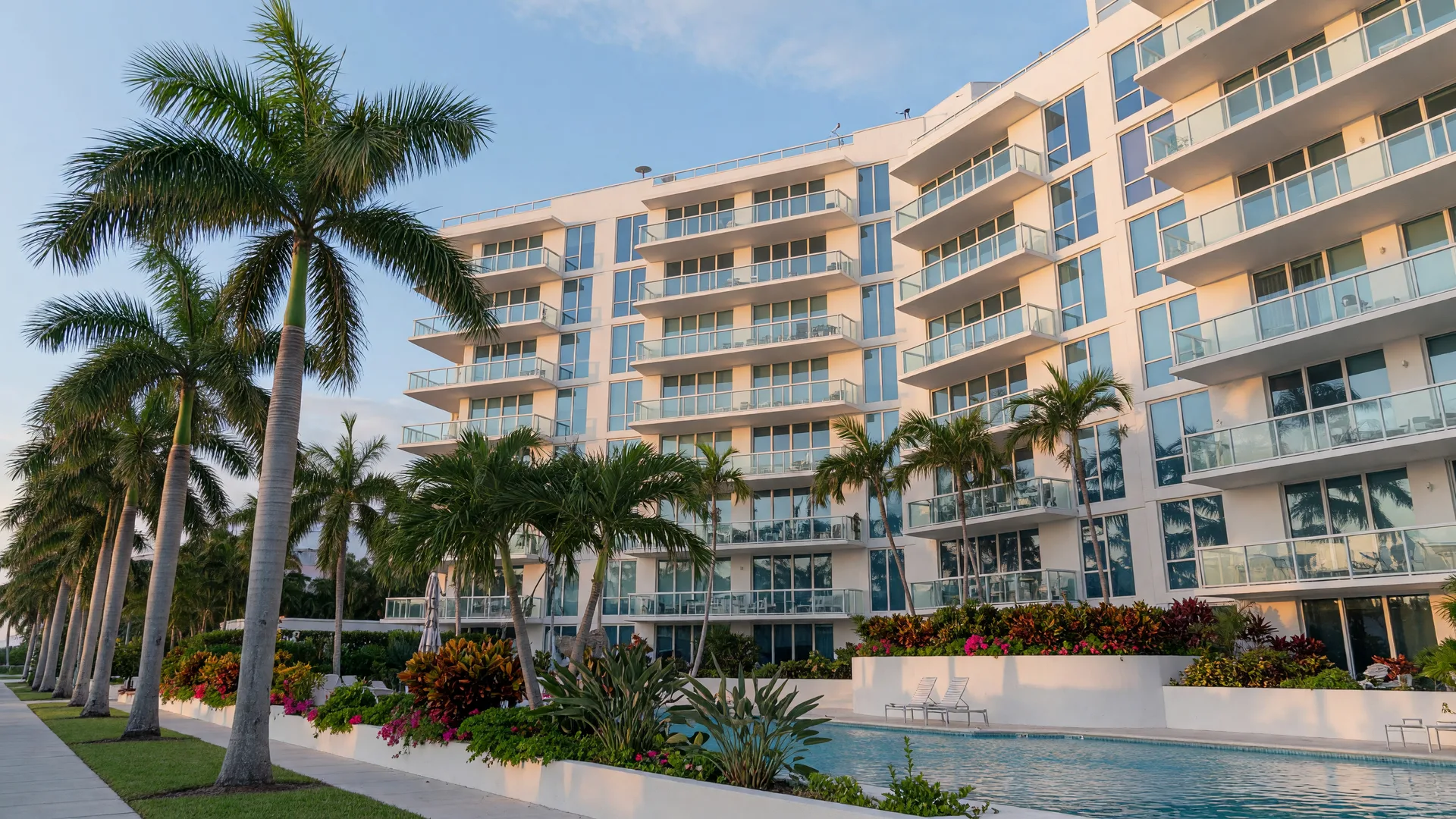
If you are looking to buy a condominium in Florida in 2026, the financing landscape has changed significantly. New rules from Fannie Mae and Freddie Mac, combined with Florida's post-Surfside structural safety laws, have made condo financing more complex than it used to be.
These changes are not a reason to walk away from condo ownership. They are a reason to go into the process informed. I believe an educated buyer makes better financial decisions, so let me walk through exactly what has changed, what lenders look for, and how you can position yourself for a smooth condo purchase in Florida right now.
Whether you are looking at a high-rise on the beach in Miami-Dade, a mid-century complex in Broward, or a courtyard building in Palm Beach, these rules will affect your financing options. Let's break them down.
Why Condo Financing Is Different From Single-Family Mortgages
When you buy a condo, you are not just buying a unit. You are buying into an entire building with shared financial obligations. Your mortgage lender needs to know that the association is well-managed, adequately insured, and financially stable. If the association fails to maintain the building or carry proper insurance, the value of every unit in the complex is at risk, and so is the lender's collateral.
That is why Fannie Mae and Freddie Mac, which back most conventional mortgages, require a full review of the condo project before they will fund loans in it. This review process has gotten significantly tighter in 2026.
The Big Changes in 2026
Two major sets of rules came into effect this year that every Florida condo buyer needs to understand.

Fannie Mae and Freddie Mac Updates (LL-2026-03)
In March 2026, Fannie Mae and Freddie Mac issued a coordinated update known as Lender Letter LL-2026-03, with most provisions taking effect August 3, 2026. Here is what changed:
- Reserve requirement increased from 10% to 15%. Condo associations must now allocate at least 15% of their annual budgeted assessment income to reserve funds. This is up from the old 10% threshold and means many Florida associations need to raise their reserve contributions significantly.
- Limited Review eliminated. Fannie Mae formerly offered a streamlined review option for well-established condo projects. As of August 3, that option is gone for most new loan applications. Nearly every condo project now goes through a full review.
- Florida PERS (Project Eligibility Review Service) retired. The optional pre-review service that some Florida associations used to fast-track Fannie Mae approval is no longer available.
- Master policy deductible capped at $50,000. The association's master insurance policy must have a deductible no higher than $50,000. Higher deductibles can disqualify the project from conventional financing.
Florida's Structural Integrity Reserve Study (SIRS) Mandate
Following the Surfside condominium collapse in 2021, Florida passed sweeping safety reforms. Under Florida House Bill 913, condo associations in buildings of three habitable stories or more must complete a Structural Integrity Reserve Study, or SIRS. The study evaluates the condition of the building's major components: the structural frame, roof, load-bearing walls, plumbing, electrical, fire protection, and waterproofing.
As of May 2026, full funding of the reserves identified in the SIRS is mandatory. Associations can no longer vote to waive or reduce these reserves, a practice that was common before the Surfside tragedy and contributed to the deterioration that led to the collapse.
What does this mean for you as a buyer? Higher monthly association fees in many buildings. But it also means better-maintained buildings and stronger financial footing for the association. That is good news for property values and for your lender's confidence in the project.
What Lenders Look for in a Florida Condo Project
When you apply for a conventional condo loan, your lender will review the project to make sure it meets these key requirements:
Owner-Occupancy Ratio
At least 50% of the units must be owner-occupied (or sold to owner-occupants). Projects with too many investors or rental units may not qualify for conventional financing. Some buildings near Florida's beaches struggle with this if a large percentage of units are vacation rentals.
Insurance Coverage
The association must carry a master property insurance policy that covers the full replacement cost of the building. In Florida, this has become an expensive and sometimes difficult requirement to meet, especially for older buildings in coastal areas like the Florida Keys, Key Largo, or Islamorada. If the association cannot secure adequate coverage, the project may not qualify for conventional loans.
Reserve Funding
As noted, the association must budget at least 15% of its income to reserves. Some Florida associations that have been deferring maintenance and underfunding reserves are now scrambling to catch up. If you are shopping for a condo, ask your real estate agent for the association's most recent budget and reserve study before you make an offer.
Litigation
A condo project involved in significant litigation may be ineligible for conventional financing. This can include disputes over construction defects, insurance claims, or association mismanagement. Your lender will check for pending or active litigation against the association.
Delinquency Rate
No more than 15% of the units can be more than 30 days past due on their association fees. A high delinquency rate signals financial stress within the project and can disqualify it from conventional financing.
Loan Options for Florida Condo Buyers
Conventional loans (backed by Fannie Mae or Freddie Mac) are the most common choice for condo buyers, but they are not the only option. Here is how different loan programs handle condo financing:
Conventional Loans
Subject to the full project review requirements discussed above. Minimum 5% down for a one-unit condo, though some lenders may require 10% or more for condos in certain buildings. The new 15% reserve rule and the elimination of Limited Review mean that fewer Florida condo projects may qualify for conventional financing going forward.
FHA Loans
FHA has its own condo approval process through the FHA Condominium Approval list. A project must be on FHA's approved list for you to use an FHA loan. FHA requires owner-occupancy of at least 50% and certain insurance and reserve requirements. FHA loans offer a low 3.5% down payment, making them popular for first-time condo buyers in Florida.
VA Loans
VA loans also require condo project approval through the VA's database. The project must be on the VA's approved list, and the VA applies similar standards to those of Fannie Mae and Freddie Mac. For Florida veterans looking to buy a condo in places like Miami-Dade or Palm Beach, VA is an excellent option with zero down payment.
Cash and Non-Warrantable Condo Financing
If a condo project does not meet Fannie Mae or Freddie Mac guidelines (a so-called non-warrantable condo), buyers may need to pay cash or work with a portfolio lender that keeps the loan on its own books. These loans often come with higher interest rates and larger down payment requirements. This is becoming more relevant in Florida as some older buildings struggle to meet the new insurance and reserve standards.
The 2026 condo rule changes are not a reason to avoid buying a condo in Florida. They are a reason to do your homework before you fall in love with a building. A project that is well-managed, adequately reserved, and properly insured will be a better investment for you and easier to finance.
Austin Edwards, Mortgage Loan Originator
How to Prepare for a Condo Purchase in Florida
Here are practical steps you can take to make sure your condo financing goes smoothly.
Get Pre-Approved Before You Start Shopping
This matters even more for condos than for single-family homes. Your lender needs to review both your finances and the project's eligibility. If you find a condo you love and then discover the project does not qualify for your loan program, you could lose the unit and any deposit you have put down. Get pre-approved first and let your lender help you evaluate the project early.
Ask for the Condo Documents Early
Before making an offer, ask your real estate agent to get the association's budget, reserve study, recent meeting minutes, and insurance certificate. Your lender can review these documents to identify potential issues. Look for reserve funding levels, special assessments, insurance deductibles, and any mention of litigation or maintenance problems.
Understand the HOA Fees
Monthly association fees are part of your total housing payment. Lenders include them in your debt-to-income ratio calculation. In Florida, condo fees have been rising as associations fund their required reserve studies and insurance costs. Make sure you are comfortable with the current fee and budget for potential increases.
Budget for Flood Insurance
If the condo building is in a flood zone, the association's master policy typically covers the building's common elements, but your individual unit and personal property may require a separate NFIP or private flood insurance policy. In coastal Florida markets like Key Largo, Islamorada, and the Keys, flood insurance costs can add significantly to your monthly expenses.
Ask About Pending Special Assessments
A special assessment is a one-time fee charged to unit owners to cover unexpected or large expenses. With Florida's new SIRS mandate, many associations are identifying deferred maintenance that needs immediate attention. If a special assessment is planned or underway, it could affect your loan approval or your out-of-pocket costs.
Condo Shopping by Florida Market
Condo financing challenges vary by market within Florida. Here is what I am seeing across the regions I serve.
Miami-Dade and Broward
Dense urban condo markets with a wide range of building ages. Newer luxury towers typically meet all financing requirements easily. Older mid-rise buildings from the 1970s and 1980s may struggle with reserve funding and insurance costs. Many buildings in this region are already addressing the SIRS requirements, but some are still playing catch-up.
Palm Beach and the Treasure Coast
A mix of older oceanfront condos and newer inland garden-style buildings. Insurance costs are a major factor here given the coastal exposure. The new $50,000 deductible cap is affecting some buildings with master policies that had higher deductibles.
Florida Keys (Key Largo, Islamorada, Key West)
Unique challenges in the Keys include flood zone requirements, windstorm insurance, and a high concentration of vacation rental units that can push owner-occupancy ratios below the 50% threshold. Buyers looking for a condo in the Keys should work with a lender who understands these specific issues before making an offer.
Frequently Asked Questions
Can I get a conventional loan for a Florida condo in 2026?
Yes, as long as the condo project meets Fannie Mae or Freddie Mac requirements. The project must have at least 15% of annual budgeted income allocated to reserves, a master insurance policy with a deductible of $50,000 or less, and no significant pending litigation. Your lender will run a full project review before closing.
What is the SIRS mandate and how does it affect me?
The Structural Integrity Reserve Study (SIRS) is a Florida law requiring condo associations to assess the condition of major building components and fully fund the reserves needed for repairs. As of May 2026, associations cannot waive these reserves. This means higher HOA fees in many buildings, but also better-maintained properties and stronger financial health.
Can I use an FHA loan to buy a condo in Florida?
Yes, but the condo project must be listed on FHA's approved condo list. Not all Florida condos qualify. If the project is not already approved, the association can apply for FHA approval, but the process takes time. Your lender can check whether a specific project is FHA-approved before you make an offer.
What happens if the condo I want is not warrantable?
A non-warrantable condo does not meet Fannie Mae or Freddie Mac guidelines. Your options include paying cash, finding a portfolio lender that offers non-warrantable condo loans (typically with higher rates and larger down payments), or working with a community bank or credit union. Some condo projects can become warrantable again once they address the specific issues that caused the rejection.
How much do I need for a down payment on a Florida condo?
It depends on the loan program. Conventional loans typically require 5% to 10% down for a one-unit condo. FHA offers 3.5% down if the project is FHA-approved. VA offers zero down for eligible veterans. Some lenders may require a higher down payment for condos in buildings with marginal project reviews or higher risk profiles.
Are HOA fees included in my debt-to-income ratio?
Yes. Monthly HOA or condo association fees are included in your total housing payment and count toward your debt-to-income ratio. In Florida, where association fees have been rising due to insurance and reserve requirements, this can significantly affect how much house you qualify for. Make sure your lender accounts for the actual fee, not an estimate.
Can I buy a condo as an investment property in Florida?
Yes, but investment property condo financing has different requirements. You will typically need a larger down payment (usually 20% or more), higher credit scores, and sufficient cash reserves. The condo project must still meet all the standard requirements, including the 50% owner-occupancy threshold. Some projects restrict the percentage of units that can be rented, so check the association's bylaws before purchasing.
The Bottom Line on Florida Condo Financing
Condo financing in Florida has changed meaningfully in 2026. The new rules around reserve funding, project review, and structural integrity are reshaping which buildings qualify for conventional loans and what buyers can expect to pay in association fees.
But here is the good news: these changes are making Florida condos safer and better managed. A building that meets the new standards is a stronger investment. The key is to go in with your eyes open, ask the right questions early, and work with a lender who knows the Florida condo market.
If you are looking at a specific building and want to know whether it qualifies for financing, I am happy to review the project documents for you before you make an offer. That is the kind of upfront information that saves buyers time, money, and frustration.
My job is not to sell you a mortgage. It is to help you understand your options, avoid costly mistakes, and choose the financing strategy that truly fits your goals.
Austin Edwards, Mortgage Loan Originator

Austin Edwards
Mortgage Loan Originator · NMLS #2639747
Austin helps Florida homebuyers and homeowners understand their mortgage options and make confident financial decisions. He believes an educated borrower makes better choices.
More Resources
Looking for more mortgage guidance? Browse the blog index for the latest articles, or reach out to Austin directly with your questions.
Have a question? Ask Austin.
Not sure whether the condo you are looking at will qualify for financing? Austin will review the project documents and give you a straight answer. No commitment, no sales pitch. Just the information you need.
Ask Austin a QuestionThinking about a Florida condo?
Let Austin walk through the numbers, check the project eligibility, and help you choose the right loan program for your condo purchase.