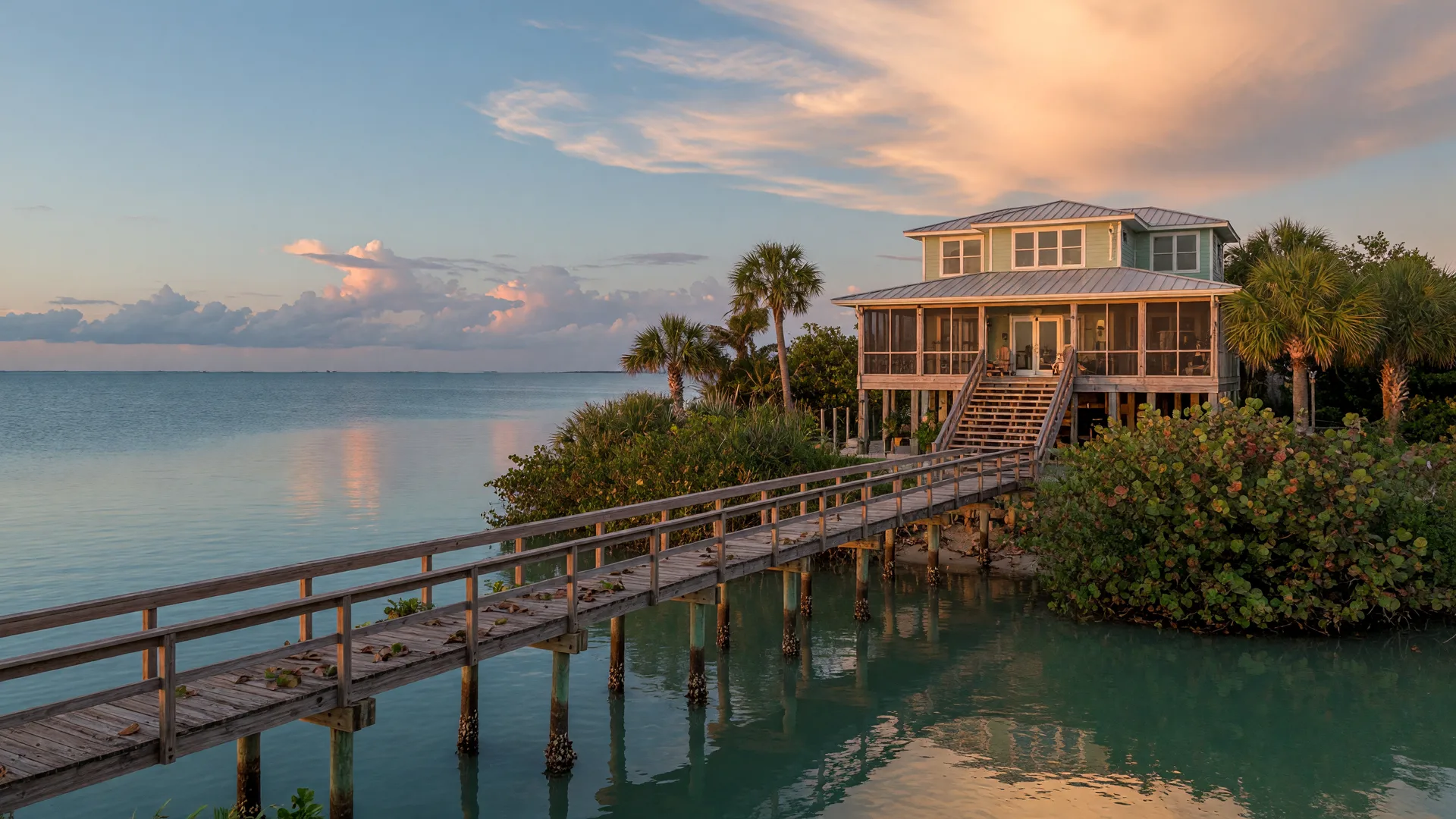
Flood insurance is one of the most misunderstood costs in a Florida home purchase, and it can quietly change your monthly payment by hundreds of dollars. This guide walks through when flood insurance is required, how FEMA's Risk Rating 2.0 sets your price, what flood zones actually mean, and how to budget for coverage before you fall in love with a home you cannot comfortably insure.
Here is the straightforward version: if you finance a home in a high-risk flood zone with any federally backed loan (FHA, VA, USDA, or a conventional loan from a federally regulated lender), you will be required to carry flood insurance. If it is not required, it is often still worth carrying. And we are writing this in late September, at the peak of Florida's hurricane season, which is exactly the right time to understand how the system works.
I want to give you the full picture, the way I would if you were sitting across the table from me in my office. The goal is to make sure flood insurance never surprises you at the closing table or in your first year of ownership.
Why Flood Insurance Is Separate From Homeowners Insurance
The first thing to understand: your standard Florida homeowners policy does not cover flood damage. Water that comes from above, like rain through a damaged roof, is typically covered. Water that comes from below or from the ground up, like storm surge, overflowing canals, or rising groundwater, is not. That exclusion is written into nearly every homeowners policy.
Flood coverage is a completely separate policy. You either buy it from the National Flood Insurance Program (NFIP), which is run by FEMA, or from a private flood insurer. That is why every honest Florida loan estimate treats flood insurance as its own line item, separate from property taxes and homeowners insurance. If you use my mortgage calculator, you will see flood insurance listed on its own line for exactly this reason.
When Flood Insurance Is Required to Close
Flood insurance becomes mandatory when two things are true: the property sits in a FEMA Special Flood Hazard Area (SFHA), and your loan is federally backed or made by a federally regulated lender. The rules come from the Flood Disaster Protection Act and were strengthened by the National Flood Insurance Reform Act of 1994. In practical terms, that covers most mortgages in Florida: FHA, VA, USDA, conventional loans sold to Fannie Mae or Freddie Mac, and loans from most banks and credit unions.
Your lender will order a flood zone determination early in the process, usually right after you apply. If the property comes back in a high-risk zone and you have a federally backed loan, flood insurance is a condition of closing. If you let coverage lapse later, your lender is required to force-place a policy for you, and lender-placed flood insurance is typically more expensive than a policy you buy yourself.
There is one more timing wrinkle worth knowing. The NFIP's authorization has been renewed in short extensions in recent years, and the current extension runs through September 30, 2026. During past lapses, new policies and renewals were paused until Congress restored the program. Congress has historically extended it, and the program remains available today. I flag it because it is the kind of headline that confuses buyers, and you should know that your loan officer cannot control it. What you can control is getting quotes early and leaving room in your timeline.
Flood Zones Explained: What A, AE, and V Mean for You
Flood zones come from FEMA's Flood Insurance Rate Maps (FIRMs). The letter codes can look like alphabet soup, but they sort into two buckets that matter for your budget.
High-risk zones are those with at least a 1% annual chance of flooding, the area FEMA calls the 100-year floodplain. That includes zones labeled A, AE, AH, and AO, plus the coastal high-hazard V and VE zones where wave action adds to the risk. If your property is in one of these zones and your loan is federally backed, flood insurance is required. This is where most waterfront Florida properties, including much of the Keys, land.
Moderate- and low-risk zones are labeled B, C, and X (including shaded X). No flood insurance requirement applies there for federally backed loans, and premiums are dramatically lower if you choose to buy coverage anyway. Keep in mind that FEMA remaps flood zones over time. A property can shift from X into a higher zone after a map update, so check the current map, not the one from a decade ago, before you make an offer.
What Flood Insurance Costs in Florida in 2026
Pricing changed completely with FEMA's Risk Rating 2.0, which was fully implemented in April 2023. Instead of pricing a property mostly by its flood zone, the NFIP now rates each home individually based on replacement cost, distance to water, elevation, foundation type, and how often the property has flooded. It is a much fairer system for some homeowners and a much bigger bill for others.
According to FEMA's state profile, about 80% of Florida's roughly 1.18 million NFIP policies saw a premium increase under Risk Rating 2.0, though most of those were modest. Premium increases on existing policies are capped at 18% per year under the program's glide path. New policies are a different story: unless you assume a seller's existing policy, a new buyer pays the full risk rate from day one. That is one reason asking about the seller's current flood policy, its premium, and its claim history is worth doing before you negotiate.
So what does it actually cost? The honest answer is that it varies more than any other number in your loan estimate. In moderate- and low-risk zones, Florida flood premiums typically run from a few hundred dollars to roughly $1,200 a year. In high-risk coastal zones, premiums commonly run from about $2,000 up to $15,000 or more a year for elevated-value waterfront homes. The NFIP caps its building coverage at $250,000 and contents at $100,000, so high-value homes often need a private or excess policy to reach full replacement cost.

NFIP vs. Private Flood Insurance
The NFIP is not your only option. Private flood insurers now write roughly a third of Florida's flood policies, and they can be a better fit depending on your property. Private carriers can offer higher limits than the NFIP's $250,000 building cap, and for newer homes or homes built above base flood elevation, private quotes are often cheaper than the NFIP's risk-based rate.
Here is what borrowers need to know: lenders are required to accept qualifying private flood insurance policies. You do not have to use the NFIP just because your lender asked for proof of coverage. The smart move is to get quotes from both the NFIP and a couple of private carriers, then compare the price, the limits, and the claim service. If you are buying a high-value home where the NFIP cap is too low, private or excess coverage may be required to satisfy your lender.
How Flood Insurance Fits Into Your Mortgage Payment and Closing
When flood coverage is required, your lender will collect the first year's premium at closing and then escrow the ongoing premium with your property taxes and homeowners insurance. You will see it broken out on your Loan Estimate and Closing Disclosure, and it becomes part of your monthly payment for the life of the loan.
That is why the number matters before you shop, not after. Two homes can have the same sale price and completely different total monthly costs because of flood insurance. A waterfront home with a $900-a-month flood premium might be within your approved loan amount, or it might push your total housing payment past your comfort zone. Get the quote early, share it with your loan officer, and let the real number guide your offer. This is exactly the kind of full financial picture I want every buyer to see before signing anything.
Flood Insurance in the Markets Austin Serves
Flood insurance shapes every Florida market differently, and the coastal areas I work in most are a good example.
The Florida Keys (Key Largo and Islamorada)
Much of Monroe County sits in high-risk flood zones, and waterfront property carries some of the highest flood premiums in the country. If you are buying a second home or rental property in Key Largo or Islamorada, budget for flood insurance as a fixed annual cost, not an afterthought. Get a real quote on the specific property before you make an offer, and factor it into the rental math if you plan to cover the cost with income.
Miami-Dade County
Miami-Dade mixes high-risk coastal zones with lower-risk inland areas, so your premium depends heavily on the exact address. Condo buyers have an extra question to ask: what does the association's master policy cover, and what is on you? Some associations carry flood coverage on the building while unit interiors and contents remain your responsibility. Ask for the association's flood policy details and loss history before you offer, because a special assessment for flood damage or coverage gaps can arrive with very little warning.
Broward and Palm Beach Counties
Much of Broward and Palm Beach, especially inland communities, sits in X zones where flood insurance is optional and relatively inexpensive. The trap is assuming that covers you everywhere. Even in lower-risk zones, it is worth weighing a few hundred dollars a year against the risk that a heavy storm or drainage failure puts water in your home. In the same counties, homes along canals and the Intracoastal can carry meaningful premiums. The price is set by the property's specifics, not the county line.
I believe an educated buyer makes better financial decisions. My job isn't to sell you a mortgage. It's to help you understand your options, avoid costly mistakes, and choose the financing strategy that truly fits your goals.
Austin Edwards, Mortgage Loan Originator · NMLS #2639747
Key Takeaways
- Homeowners insurance does not cover floods. Flood coverage is a separate NFIP or private policy, and it gets its own line on your loan estimate and monthly payment.
- The requirement is zone plus loan type. A federally backed loan on a property in a Special Flood Hazard Area means flood insurance is mandatory. Outside those zones it is optional, often at a modest price.
- Risk Rating 2.0 prices your property, not your zone. Elevation, distance to water, replacement cost, and flood history now drive the NFIP rate, and new buyers pay the full rate unless they assume the seller's policy.
- Private flood insurance is a real alternative. Private carriers cover about a third of the Florida market, can exceed NFIP limits, and lenders must accept qualifying policies. Quote both.
- Get the quote before you offer. A few hundred dollars a month in flood premium changes what you can afford. Know the real number first.
- Plan around NFIP timing. New policies normally carry a 30-day waiting period, so line up coverage early and keep a little slack in your closing timeline.
Frequently Asked Questions
Is flood insurance required to buy a home in Florida?
Only when the property is in a FEMA Special Flood Hazard Area and your mortgage is federally backed or made by a federally regulated lender. That covers most FHA, VA, USDA, and conforming conventional loans in Florida. Outside high-risk zones, flood insurance is optional, but many buyers choose to carry it anyway.
How much does flood insurance cost in Florida in 2026?
It depends on the property. Low-risk zones typically run from about $400 to $1,200 a year. High-risk coastal zones commonly run from about $2,000 to $15,000 or more a year, with the highest premiums on elevated-value waterfront homes. Under Risk Rating 2.0, the price is based on the home's specifics, so the only way to know is to quote the actual property.
What is FEMA's Risk Rating 2.0?
It is the NFIP's modern pricing system, fully implemented in April 2023. Instead of setting rates mostly by flood zone, it rates each home on its own risk factors: replacement cost, distance to water, elevation, foundation type, and flood history. Premium increases for existing policyholders are capped at 18% per year, while new buyers generally pay the full risk rate.
Does homeowners insurance cover flood damage in Florida?
No. Standard Florida homeowners policies exclude flood damage, including storm surge and rising groundwater. Flood coverage has to come from the NFIP or a private flood insurer as a separate policy. Check your policy language with your insurance agent so there are no surprises after a storm.
Can I buy private flood insurance instead of the NFIP?
Yes. Private flood insurers now write a large share of Florida's flood policies, and lenders are required to accept qualifying private coverage. Private policies can offer higher limits than the NFIP's $250,000 building cap and are sometimes cheaper for newer or elevated homes. Get quotes from both before choosing.
How far ahead of closing should I get flood insurance?
Start as soon as you have a property under contract, ideally before you make the offer. New NFIP policies normally have a 30-day waiting period before coverage starts, though coverage needed at a loan closing can often take effect at closing. Leaving a little slack in your timeline protects you from delays and gives you time to compare private quotes.

Austin Edwards
Mortgage Loan Originator · NMLS #2639747
Austin helps Florida homebuyers and homeowners understand their options and make confident mortgage decisions. He believes an educated borrower makes better financial choices.
More Resources
Flood insurance is one part of the full Florida ownership picture. Pair this guide with our look at homeowners insurance costs in 2026, the fall 2026 market outlook, and how much house you can really afford. Or reach out to Austin with your specific questions.
Have a question? Ask Austin.
Every buyer's situation is different. If something in this article raised a question about your own plans, Austin would love to hear from you. No commitment, no sales pitch. Just a straight answer.
Ask Austin a QuestionReady to make your move?
Get pre-approved or schedule a free consultation with Austin. He will walk you through your options, explain the numbers, and help you build a plan that fits your goals.