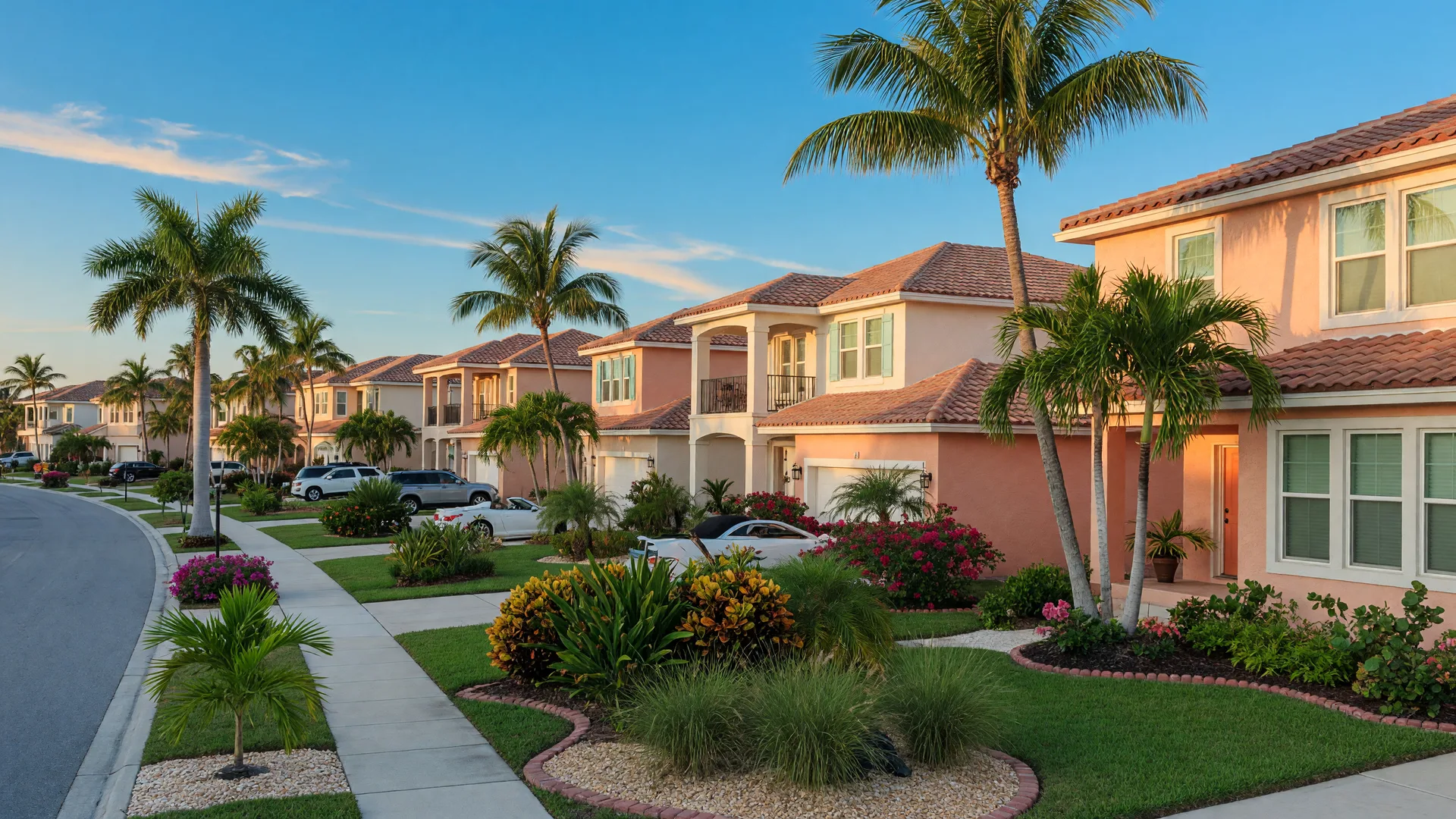
The Florida housing market has been through a lot over the past few years. From the pandemic-era frenzy to the post-2023 rate adjustment, and now into a period that looks more like a traditional real estate cycle with distinct regional differences across the state.
If you're thinking about buying or selling a home this fall, you probably want to know one thing: what is the market actually doing right now, and what does it mean for you?
Let's look at the numbers, break down what is happening in different parts of Florida, and talk about how to make smart decisions in this market. As always, my goal is to give you a straight, clear picture so you can move forward with confidence.
The Big Picture: Florida Housing Market in Summer 2026
The headlines can be confusing, so let me simplify. As of July 2026, the statewide median sale price for single-family homes in Florida hit about $432,000, up roughly 5% year-over-year and marking a new record high. That number tells you that home values have held steady and continue to climb, though at a much slower pace than we saw in 2021 and 2022.
Inventory has improved significantly. Months of supply statewide sits around 4.5 months, up from the extremely tight sub-2-month levels of the pandemic years. That is still below the 6 months that traditionally signals a balanced market, but it is moving in the right direction for buyers.
Mortgage rates are hovering in the mid-6% range, with the average 30-year fixed rate around 6.43% as of late July. That is down from a year ago when rates were closer to 6.67%, and well below the 2023 peak near 8%. Rates have been relatively stable, which has helped both buyers and sellers plan with more certainty.
What Fall 2026 Typically Brings to the Florida Market
Fall has historically been a transitional period in Florida real estate. The summer tourism season winds down, families are settled into school routines, and the market often sees a modest seasonal slowdown. New listings tend to taper off, days on market increase slightly, and inventory builds as we head into the winter months.
This year, that normal seasonal pattern is expected to return more clearly than it has in the past few years. The market is not overheating, and it is not crashing. It is normalizing. For buyers, fall can be an excellent time to shop. There is typically less competition than in the spring and summer, and sellers who have been on the market for a while may be more willing to negotiate on price or concessions.
For sellers, the key is pricing realistically from day one. Homes that are priced right and in good condition are still selling. Overpriced listings tend to sit, and after 60 days on the market, you often start chasing the price down.
A Closer Look at Florida's Key Markets
Florida is not one market. It is many markets with distinct dynamics. Here is what I am seeing across the areas I serve.
Florida Keys (Monroe County)
The Keys remain a supply-constrained market, and prices reflect that. The median sale price in Key Largo and Islamorada has jumped as high as $965,000 as of mid-2026, with year-over-year increases of 12%. Active listings are down nearly 3%, and luxury properties continue to see strong demand. If you are looking for a primary residence or second home in the Keys, expect competition, especially for waterfront properties. Low inventory means that well-priced homes still move quickly.
For buyers in the Keys, getting pre-approved before you start shopping is essential. Sellers want to see that you are serious and financed. And given the high property values, flood insurance and windstorm coverage are significant cost factors to budget for from the start.
Miami-Dade County
Miami-Dade tells two different stories depending on property type. Single-family homes remain in strong demand, with a median price around $595,000 and pending sales up 11% year-over-year as of May 2026. Single-family values have appreciated in 167 of the last 168 months, which tells you how consistent demand has been.
The condo market, however, is a different picture. There is roughly 7.6 months of condo supply in the county, and the luxury condo segment has tipped into buyer's market territory. Post-Surfside regulatory requirements, rising HOA fees tied to new reserve requirements, and special assessments are creating headwinds for condo buyers and sellers alike. If you are looking at condos in Miami-Dade, the building's financial health and warrantability matter as much as the unit itself.
Palm Beach County
Palm Beach County is moving toward a balanced market. The median home price is around $490,000 to $505,000, with year-over-year growth of 3% to 5%. Inventory is up about 25% compared to last year, and months of supply reached 7.5 by April 2026. Homes are staying on the market longer, typically 45 to 50 days, which gives buyers more time to evaluate their options.
This is a market where buyers have more negotiating room than they did a year or two ago. Sellers are increasingly willing to offer concessions, help with closing costs, or adjust their asking price. For buyers who felt priced out during the peak, Palm Beach County is becoming more accessible.
Broward County
Broward County shows the sharpest split between single-family homes and condos. Single-family homes are in relatively tight supply at 4.6 months of inventory, with a median price around $469,000. Well-priced homes in communities like Miramar, Pembroke Pines, and Lauderhill continue to attract strong buyer interest.
Condos in Broward tell a different story, with supply at a striking 12.9 months, firmly in buyer's market territory. The same condo financing challenges affecting Miami-Dade are also present here. If you are selling a condo in Broward, pricing and condition matter more than ever. If you are buying, you have more options and more leverage than you would in the single-family market.
What This Means for Buyers This Fall
If you are a buyer, here is the honest assessment: conditions are more favorable than they have been in several years, but affordability remains the central challenge.
The good news: more inventory means more choices and less pressure. You can take your time, compare options, and negotiate. Sellers are more open to helping with closing costs or making repairs than they were in 2021 or 2022. Mortgage rates have stabilized in the mid-6% range, which gives you a predictable baseline for calculating your monthly payment.
The hard truth: prices are still near all-time highs, and even with stable rates, the monthly payment on a median-priced Florida home is substantially higher than it was a few years ago. That is why it is so important to understand your full housing cost, not just the sale price. Property taxes, homeowners insurance, flood insurance, and HOA dues all add up, and they vary significantly by location.
What This Means for Sellers This Fall
If you are selling, the market is still favorable, but it requires more strategy than it did two years ago. The days of listing a home and getting multiple offers above asking within 48 hours are not gone everywhere, but they are less common.
Here is what works in this market: price your home competitively from the start. Make sure it shows well, address obvious repairs before listing, and work with a real estate agent who knows your specific market. Homes that are priced right and marketed well are still selling. Homes that are overpriced sit, and they often end up selling for less than they would have if priced correctly from day one.
If you are in a condo building that is facing a special assessment or has financing challenges, be upfront about it. Buyers and their lenders will discover these issues during due diligence anyway, and transparency builds trust.
I believe an educated buyer makes better financial decisions. My job isn't to sell you a mortgage. It's to help you understand your options, avoid costly mistakes, and choose the financing strategy that truly fits your goals.
Austin Edwards, Mortgage Loan Originator · NMLS #2639747
The Mortgage Rate Outlook for Fall 2026
Predicting rates is always a fool's errand, but here is what we know. The Federal Reserve has signaled a more patient approach to rate cuts, and mortgage rates are reacting more to inflation data and economic growth than to Fed policy directly. Most forecasts suggest 30-year rates will stay in the 6% to 6.5% range through the fall and into early 2027, with the possibility of gradual declines if inflation continues to cool.
My advice: do not try to time the market. If you find a home that works for your budget and your lifestyle, and you plan to stay for at least a few years, buying when the numbers make sense for your personal situation is almost always better than waiting for the perfect rate that may not come.
And rate is only part of the picture. A slightly higher rate on a well-priced home in a great location may serve you better than a lower rate on a home that requires compromise on what matters most to you.
Key Takeaways for Fall 2026
- More inventory, less frenzy. Buyers have more options and more room to negotiate than in recent years. Sellers need to price realistically.
- Regional differences matter. The Keys are still supply-constrained. Miami-Dade single-family is strong while condos struggle. Palm Beach is trending toward balance. Broward condos are a buyer's market.
- Affordability is the real story. Between elevated prices and mid-6% rates, your total monthly payment is the number that matters. Get a clear picture of taxes, insurance, and HOA costs before you commit.
- Fall is a smart time to buy. Less competition and motivated sellers create a favorable window for buyers who are prepared.
- Get pre-approved early. Whether you are buying in Key Largo, Palm Beach Gardens, or Pembroke Pines, a pre-approval tells you exactly where you stand and makes your offer stronger.
Frequently Asked Questions
Is the Florida housing market going to crash in 2026?
No credible data suggests a crash is coming. The market is cooling and normalizing, not collapsing. Inventory is rising from historic lows, price growth is slowing, and we are moving toward a balanced market. That is healthy, not alarming.
Should I wait for mortgage rates to drop before buying?
Rates could drop, but they could also stay flat for a while. If you find a home you love that fits your budget, waiting for a rate change that may not arrive can cost you more in rising prices or missed opportunities. Buy when you are ready, not when you think rates will be perfect.
Are home prices in Florida going down?
Not in most markets. Statewide, prices are still appreciating, just at a slower pace. Some overheated markets may see modest price adjustments, and condo prices in certain areas are under pressure due to financing and HOA issues. But a broad price decline is not happening.
Is now a good time to buy a condo in Florida?
It depends on the building. There are good deals available in the condo market, especially in areas with high inventory. But you need to do your homework on the building's reserves, special assessments, and whether it meets Fannie Mae, Freddie Mac, or FHA financing requirements. Work with a lender and agent who understand condo financing.
What Florida markets are best for first-time buyers right now?
Markets with more inventory and more affordable price points include parts of Palm Beach County, inland Broward communities like Miramar and Pembroke Pines, and areas in Central Florida like Tampa and Orlando. Jacksonville has also been named one of the top U.S. markets for first-time buyers in 2026.
How much homeowners insurance should I budget for in Florida?
Statewide averages range from $5,800 to $7,200 per year, but coastal areas can be significantly higher. Get real quotes early in your home search. A home that looks affordable on paper may be out of reach once you add in the actual insurance cost.

Austin Edwards
Mortgage Loan Originator · NMLS #2639747
Austin helps Florida homebuyers and homeowners understand their options and make confident mortgage decisions. He believes an educated borrower makes better financial choices.
More Resources
For more context on the Florida market, check out our guides on buying your first Florida home, comparing loan programs, and refinancing options. Or reach out to Austin directly with your specific questions.
Have a question? Ask Austin.
Every buyer's situation is different. If something in this article raised a question about your own plans, Austin would love to hear from you. No commitment, no sales pitch. Just a straight answer.
Ask Austin a QuestionReady to make your move?
Get pre-approved or schedule a free consultation with Austin. He will walk you through your options, explain the numbers, and help you build a plan that fits your goals.