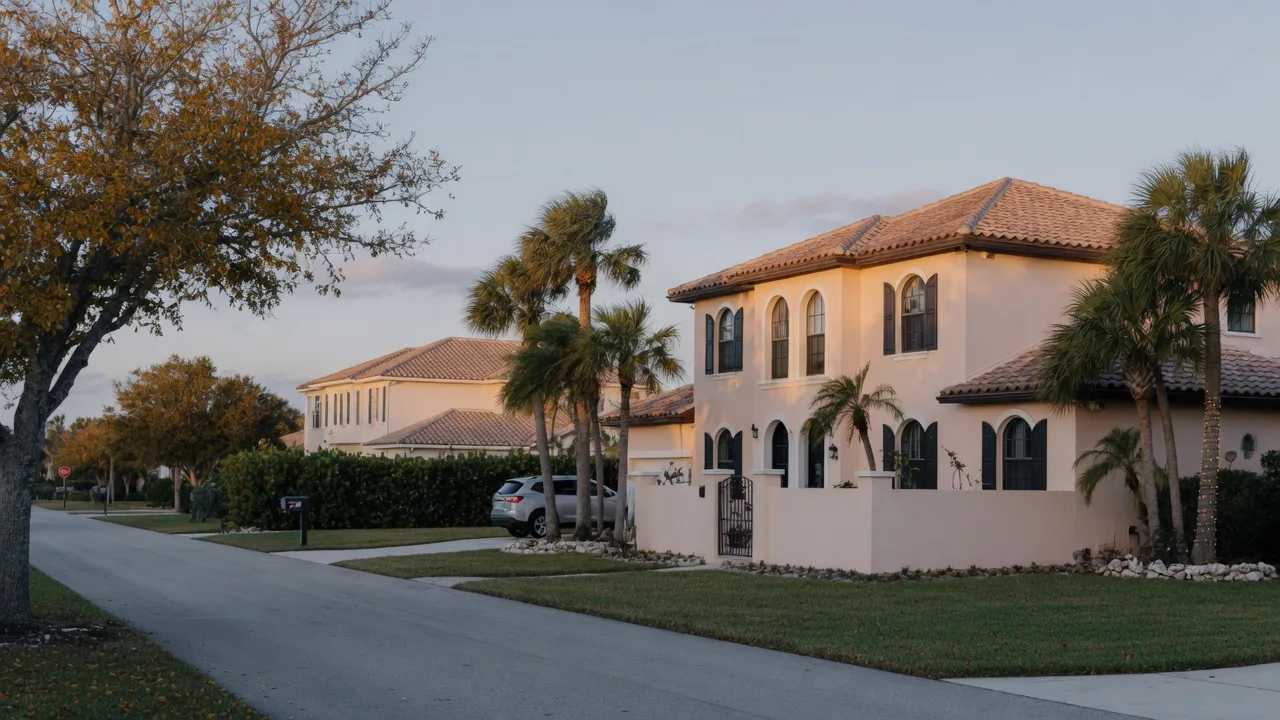
If you are shopping for a home in Florida, the stretch from late October through the end of the year can be one of the most buyer-friendly windows of the entire market. Fewer buyers are touring homes, more sellers are motivated to get to the closing table before January, and prices in many markets sit off their seasonal peak.
This is a market where the holidays often work in your favor, but only if you show up prepared. Rates have spent October 2026 hovering above 7%, with Freddie Mac's 30-year survey averaging 7.40% in early October, so the payment math on any home matters more than it did a year ago. Buying in the slower season is one of the few tools that does not require a lower rate to save you money.
Here is what the data says about Florida's winter housing market, why the holidays can give buyers an edge, the trade-offs to keep honest, and how to position yourself to take advantage of the window.
Why November and December Are a Buyer-Friendly Window in Florida
The seasonal rhythm of Florida real estate is fairly consistent. The busiest stretch of the year runs from late winter into spring, when the snowbirds are here, families want to settle before summer, and inventory tends to be at its peak. From Thanksgiving through the first weeks of January, a lot of buyers pause their search entirely. That is exactly why this window can favor the buyer who keeps looking.
Realtor.com's Best Time to Buy analysis for 2026, reported by Florida Realtors, landed on the most favorable weeks of the year in this exact stretch: the week of October 25 to 31 in Jacksonville and Orlando, and the week of November 29 to December 5 in Miami and Tampa. Across these markets, the analysis found more inventory, less competition, and asking prices below their seasonal peaks.
The reasons are straightforward. Many households put house hunting on hold during the holidays, which means fewer competing offers on the homes that are available. Sellers who list in November and December are more likely to be working against a timeline, whether that is a job relocation, a new build, or simply a desire to close the deal in the current calendar year. When buyers step back and sellers stay motivated, negotiating room opens up.
The Numbers Behind the Winter Slowdown
Seasonal data puts hard numbers on what many agents observe every year. Using Jacksonville as the example from Realtor.com's 2026 analysis, its most favorable week of the year saw median asking prices historically about 7.1% below their seasonal peak, active listings about 13.8% above an average week, and buyer competition, measured by listing views per property, about 40.6% below the average.
The pattern shows up across the board. Buyer competition historically drops by roughly a quarter to forty percent during December and January, and Florida home prices have historically eased a few percent from December into January as sellers push to close before year-end. A few percentage points of price or negotiation room on a $400,000 home is real money, before you even factor in a seller credit toward closing costs.
It is worth saying plainly: these are seasonal averages, not a guarantee for any single neighborhood. A hot pocket of Miami-Dade or the Florida Keys can see multiple offers in December. But as a general rule, the holiday window historically tilts toward the buyer in ways the spring market does not.
What Actually Changes for You as a Buyer
Fewer competing buyers changes the whole feel of the process. Here is what tends to improve when the market slows down.
Less Pressure to Make a Snap Decision
In a competitive spring market, you might feel pushed to offer within hours of a first showing. In November and December, homes often sit for a few extra weeks, which gives you time to compare properties, run the payment math, and make an offer you are actually comfortable with.
More Motivated Sellers
A home listed around the holidays is usually listed for a reason. Relocations, builders closing out spec inventory, and owners who want the tax and timing benefits of a year-end sale all produce sellers who are genuinely ready to negotiate rather than hold out for top dollar.
More Room to Negotiate the Full Deal
In a slower market you have more than price to work with. Seller concessions can cover closing costs, prepaids, or a rate buydown, and a seller who wants to close by year-end is often willing to be flexible on repairs and the closing date. In a market with rates above 7%, a seller-funded buydown can be worth more to your monthly payment than a small price reduction.
More Availability From Everyone Involved
Your agent, the listing agents, appraisers, and title offices all carry lighter workloads in the holiday stretch. That can mean faster responses, easier scheduling for inspections, and a less rushed path to closing.
The Trade-Offs to Keep Honest
The winter window is a real advantage, but it is not a free pass. A few caveats are worth keeping in mind so the holiday market does not catch you off guard.
- Inventory can be thinner. Fewer buyers usually also means fewer new listings. If you are set on a very specific home in a narrow price band, you may have to wait for the right property to hit the market. The edge comes when the right home does appear and you are ready to act.
- Holiday closings can take longer. Appraisers, title companies, and lenders all work around holiday schedules, and banks are closed on federal holidays. Build in extra time and stay flexible on the closing date if you need to close between Thanksgiving and New Year's.
- Winter is not slow everywhere in Florida. South Florida is a different animal. Snowbird and international demand keeps markets like Miami-Dade, Palm Beach, and the Florida Keys active through the winter, and in parts of the state the true seasonal peak runs from January through March. The low-competition advantage is strongest in late November and December, and even then it is "less frantic," not empty.
- A discount does not make a bad fit a good buy. The cheapest December deal on a home that does not meet your needs is still the wrong home. Buy for the right reasons, and treat the seasonal advantage as a bonus on top of a property that genuinely works.
How to Make the Winter Market Work for You
The buyers who benefit most from the holiday window are the ones who arrive ready. Here is what I recommend before you start touring.
Get Pre-Approved Before You Tour
A seller who has been sitting on a listing since October does not want a tire kicker in December. They want a buyer who can close. A pre-approval tells the seller you are serious, and it lets you move fast when the right home appears, which matters even in a slower market.
Plan Your Closing Timeline Realistically
If you want to close by year-end, talk to your lender early about the timeline. Mortgage underwriting does not stop for the holidays, but appraisers and title offices have limited schedules. A conventional closing typically runs 30 to 45 days, so a late-November contract can still land in December, but every week of buffer helps.
Know Your Full Payment, Not Just the Rate
With rates above 7% in late 2026, the monthly payment is the number that matters, and in Florida that payment includes property taxes, homeowners insurance, and flood insurance where the property sits in a flood zone, plus HOA or condo dues. Use the mortgage calculator to model the full picture before you make an offer, and get insurance quotes early rather than discovering the cost at the end.
Ask for What a Slower Market Can Deliver
In the holiday window, do not be shy about asking for seller concessions. A credit toward closing costs or a temporary rate buydown can lower your upfront cash or your payment in a way that a slightly lower price cannot. Just make sure the numbers actually help you, and compare loan scenarios side by side.
What Winter Timing Means in Specific Florida Markets
Florida is really several different markets, and the holiday window lands differently in each one.
In the Florida Keys, the median sale price has been near $1.1 million in 2026 with very thin inventory, and winter is prime season for second-home and snowbird demand. Expect competition to stay meaningful in Key Largo, Islamorada, and Marathon even in December; the advantage is being ready to act quickly when a rare listing appears, not waiting for prices to fall.
In Miami-Dade, single-family homes have been holding value while the condo market carries roughly a year of supply. That split means condo buyers in Miami-Dade have real negotiating room this winter, especially in buildings that pass condo warrantability and Florida's reserve and Structural Integrity Reserve Study requirements, while single-family buyers should expect more competition.
In Broward and Palm Beach, single-family inventory is tight and prices have been climbing, with Palm Beach's median up more than 10% year over year in late 2026. Condos and townhomes are a different story, with supply measured in many months. If your target is a condo or townhome in Fort Lauderdale, Boca Raton, or West Palm Beach, the holiday window can be genuinely favorable; if you want a single-family home, expect the market to stay competitive and lean on being pre-approved.
The common thread is that the winter advantage is strongest in the segments where buyers have stepped back and inventory has piled up, and weakest in the tightest, most in-demand pockets. Know which side of that line your target market is on before you set your expectations.
Frequently Asked Questions
Is winter a good time to buy a house in Florida?
For many buyers, yes. Late October through December historically brings fewer competing buyers, more motivated sellers, and prices below their seasonal peak across much of Florida. The main trade-offs are thinner inventory in some areas and the need to plan around holiday schedules for closing.
Do home prices drop in November and December in Florida?
Seasonally, yes, prices tend to ease a few percent from December into January, and asking prices in the most favorable weeks have run several percent below their seasonal peak. That is a seasonal average, not a guarantee, and it varies by neighborhood and market segment.
Why is there less competition in the Florida housing market during the holidays?
Many households pause their house hunt around Thanksgiving and the new year, so fewer buyers are making offers on the homes that are listed. Sellers who list during the holidays tend to be working against a timeline and are more willing to negotiate.
Can you close on a home over the holidays, and should I worry about delays?
Yes, closings happen year-round, but appraisers, title offices, and lenders work around holiday schedules and bank closures. Build extra buffer into your timeline, stay flexible on the closing date, and start the process early if you want to close before the new year.
Is it better to wait until after the new year to buy in Florida?
Not necessarily. Waiting brings more listings but also more competing buyers, and in parts of Florida the seasonal peak runs January through March. If you are ready and pre-approved, the holiday window can offer better leverage than waiting for the spring rush.
Do seller concessions and rate buydowns work better in a slower winter market?
Yes. With rates above 7%, a seller credit toward closing costs or a temporary buydown can lower your payment meaningfully, and sellers eager to close by year-end are often open to concessions. Compare the full loan scenarios to see whether concessions help you more than a slightly lower price.
The Bottom Line on Florida's Winter Market
The holiday window is one of the few times a year when the Florida market can work in your favor, less competition, more motivated sellers, and more room to negotiate. It is a window, not a shortcut. The buyers who benefit are the ones who show up pre-approved, know their full payment, and are ready to move when the right home appears.
In a rate environment above 7%, every decision matters, from the home you choose to how the deal is structured. A seller concession, a buydown, or a realistic closing timeline can all shift the outcome, and a lender who understands your market can help you line them up.
If you are thinking about buying in Florida this winter, the first step is simple: get a clear picture of what you can afford before the holidays arrive. That way, when the right home hits the market, you can make a confident offer instead of watching it go to someone who was ready first.
The holidays are one of the few times of year when the Florida market can work in your favor. The edge goes to the buyer who is ready to move.
Austin Edwards, Mortgage Loan Originator

Austin Edwards
Mortgage Loan Originator · NMLS #2639747
Austin helps Florida homebuyers understand their options and make confident mortgage decisions. He believes an educated buyer makes better financial choices.
More Resources
For more context on Florida's current market, read the fall 2026 market outlook, the Miami-Dade market update, or the Florida Keys market update. Wondering whether waiting is the right call? Read should you buy now or wait. Browse the blog index for more, or reach out to Austin directly.
Have a question? Ask Austin.
Wondering whether the winter window works for your situation, or what your full Florida payment would look like? Austin can run your numbers, walk you through the timing, and help you build a plan for the new year. No commitment, no sales pitch. Just a straight answer.
Ask Austin a QuestionReady to make the winter market work for you?
Austin will help you get pre-approved, understand your full Florida housing budget, and plan a realistic timeline before the holidays. No pressure, just a clear picture of where you stand.