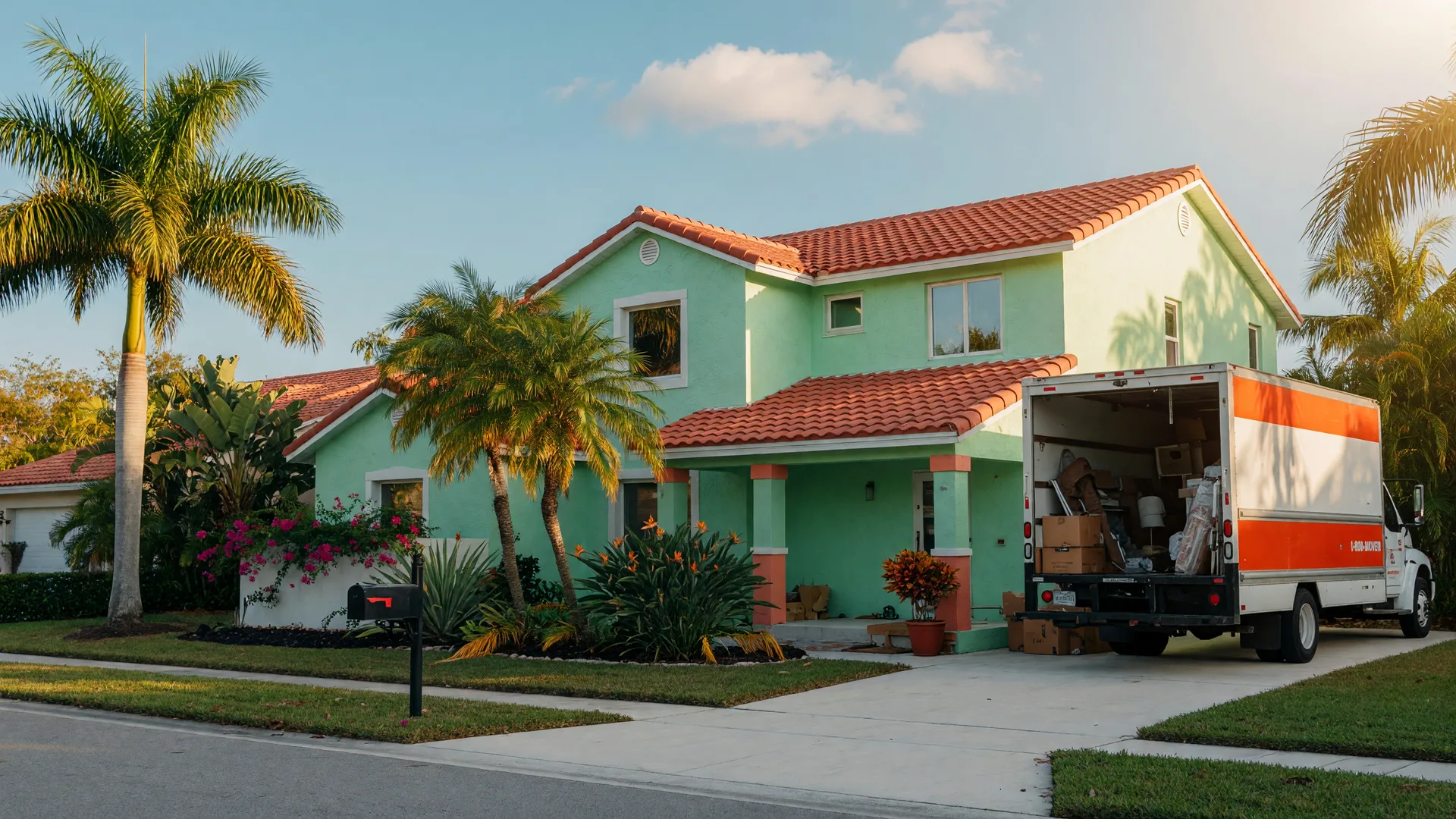
Yes, you can get a Florida mortgage before you set foot in the state, and thousands of out-of-state buyers do exactly that every year. Florida has been the most popular moving destination in the country for years running, and the mortgage process for a relocating buyer is very doable. It just works differently than a local purchase, and the costs that shock most newcomers are usually not the ones they expected.
Here is what it actually takes to buy a Florida home from out of state in 2026: how pre-approval works when you live elsewhere, the one question that sets your rate and terms, the Florida costs that surprise people, and how you can close on a home without flying down for the signing.
Rates spent October 2026 above 7%, with Freddie Mac's 30-year survey averaging 7.40% in early October, so the payment math matters more than it did a year ago. Getting the details right before you search is what separates a smooth relocation from an expensive one.
Can You Get a Florida Mortgage Before You Move? Yes.
You do not need a Florida address, a Florida driver's license, or a Florida job to qualify for a Florida home loan. You need a lender licensed in Florida, clean documentation, and a clear answer on how you intend to use the property. I am a Florida-licensed mortgage loan originator (NMLS #2639747), and I work with relocating buyers in every market I serve, from the Florida Keys and Islamorada to Miami-Dade, Broward, and Palm Beach.
The qualifying process looks the same as it does for a local buyer. You provide tax returns, pay stubs, and asset statements; the lender verifies your income and credit; and you receive a pre-approval that shows sellers exactly what you can afford. The pre-approval is portable, meaning it works with any Florida real estate agent and any home you make an offer on within its validity window.
In a market where rates are above 7% and buyers are watching every dollar of their payment, a complete pre-approval also makes your offer stronger. Sellers know a pre-approved buyer is far less likely to fall out of contract at the finish line. If you are shopping from another state, that credibility is worth even more, because you cannot drop by the listing agent's open house every weekend.
Why Out-of-State Buyers Keep Choosing Florida
The reasons are consistent in the data. In the most recent Census and moving-company reports, Florida was the single most popular destination for domestic movers, and metro areas like Ocala, Lakeland, Port St. Lucie, North Port, and Palm Bay-Melbourne ranked among the fastest-growing in the country. The top states sending movers here are New York, Georgia, California, Texas, and New Jersey.
People move for the obvious reasons: no state personal income tax, warm weather, and, in inland markets especially, homes that cost less than what they left behind. Remote work has made the move easier, since many buyers now keep their out-of-state job and commute it rather than their car.
The timing is also worth noting. Inventory has climbed across most of Florida, homes are staying on the market longer than they did during the 2021 and 2022 frenzy, and sellers are more willing to negotiate on price and terms. For a relocating buyer who can be patient and prepared, this is a much better market to enter than the bidding-war years. If you want the full seasonal picture, my guide to Florida's winter housing market breaks down why October through December can favor buyers.
The First Question Is Not the Rate. It's Occupancy.
Before we ever talk rate, I ask every relocating buyer one question: how will you use this home? Primary residence, second home, or investment property. That answer drives your down payment requirement, your rate, and the underwriting rules, and it is the most common source of surprises I see from out-of-state buyers.
For a primary residence, lenders generally expect you to move in within 60 days of closing. That means your Florida home becomes where you actually live most of the year. A second home has different occupancy expectations and usually requires a larger down payment. An investment property has stricter requirements still, and the rate reflects the added risk to the lender.
I sometimes hear from buyers who plan to live in the home full time but are tempted to call it a second home to get a lower down payment. That is a costly mistake. Lenders verify occupancy, and misstating it can void your rate, trigger a fraud review, and even require you to refinance into a different loan. The honest answer almost always gets you the best outcome, because we can structure the loan around your actual plan.
If you are splitting time between two states, that can still work as a primary residence as long as your Florida home is truly where you live most of the year and you can document it. The key is telling your lender the real plan up front so the loan is built correctly from day one.
Buying Before Your Current Home Sells
A lot of relocating families are carrying one mortgage payment while they shop for the next home, and the numbers need to work with both payments on the table. Lenders count your existing housing payment as debt until it is paid off at closing, so your debt-to-income ratio has to fit with the new payment on top of it.
There are several ways to handle the overlap. Some buyers sell first and negotiate a rent-back so they can stay in their old home for a month or two after closing. Others make an offer on the Florida home contingent on selling their current one, though in a market where sellers have choices, a contingency can put your offer at the bottom of the pile. Others tap equity or bridge financing to cover the gap.
There is no single right answer, and it changes with your equity position, your savings, and the strength of your buyer's market back home. What I recommend is running all the scenarios before you start shopping so you know which offers you can actually make. That planning is exactly what I walk buyers through in a pre-approval conversation.
The Florida Costs That Catch Out-of-State Buyers Off Guard
Florida has no state income tax, which is a real advantage. But it has costs that are higher than almost anywhere else in the country, and they ride inside your monthly mortgage payment. Budgeting for them wrong is the fastest way for a relocation to go sideways.
Homeowners Insurance
Florida homeowners insurance is among the most expensive in the nation, driven by hurricane risk, reinsurance costs, and a tough claims climate. Depending on where you buy, insurance can add $300 to $800 or more to your monthly payment, and coastal areas like the Keys run higher. Insurance is paid through your escrow account, so it is baked into the mortgage payment you see every month.
Get insurance quotes before you make an offer, not after. The age and condition of the roof, the year the home was built, and the exact address can move a premium by hundreds of dollars a month, which changes what you can afford. The 2026 market is better for buyers than recent years, but quotes are the only way to know your real number.
Flood Insurance and Flood Zones
Flood insurance is a separate policy, and it is required when your home is in a mapped flood zone and you use a federally backed loan, which covers most conventional, FHA, and VA mortgages. Premiums are set under FEMA's Risk Rating 2.0, which prices each property individually, so two similar homes a block apart can have very different premiums. Even outside a high-risk zone, many Florida buyers choose to carry coverage because a single heavy rain event can cause thousands in damage.
This is not a line item to wave off. I walk every buyer through the flood map for the property they are considering so they understand the cost before they commit. My guide to flood insurance in Florida covers how zones and pricing work in detail.
Property Taxes and the Homestead Exemption
Your first year in a Florida home, you are generally taxed on the purchase price, because the assessed value resets to what you paid. Then the homestead exemption knocks up to $50,000 off the taxable value for your primary residence, and the Save Our Homes amendment caps how fast the assessed value can grow each year, at the lesser of 3% or inflation.
The longer you own, the more that cap protects you, because your neighbors' assessments rise with the market while yours stays capped. Out-of-state buyers should also know that Florida's portability benefit only applies to moves within Florida. If you are coming from another state, you start fresh, which is fine, because the benefit builds year after year from the day you close.
I cover the full homestead, Save Our Homes, and portability picture in my Florida property tax guide, including what the November 2026 ballot measure could change.
HOA and Condo Fees
In many Florida communities, especially condos and planned developments, monthly HOA or condo fees are $300 to $1,000 or more, and lenders count them in your debt-to-income ratio. Condo buyers also face the state's structural reserve and SIRS requirements, which have tightened financing and raised some association budgets. If you are coming from a market without mandatory associations, this is a real adjustment.
How You Close on a Florida Home From Out of State
Closing remotely is normal now. Florida has allowed Remote Online Notarization since January 2020, which means you can sign your closing documents over a secure, recorded audio-video session with a Florida-commissioned notary, while you sit anywhere in the United States. Many buyers close this way without ever boarding a plane.
There are options if your lender or title company does not use remote notarization for the note: a mail-away closing where you sign before a notary near your current home and return the documents, or a mobile notary who comes to you. The right approach depends on the lender and the state you are signing from, so it is worth confirming the process at application time rather than the week of closing.
The appraisal and inspection happen locally, of course. Your appraiser visits the Florida home, and you can join the inspection by video with your inspector if you cannot be there in person. Most of the paperwork, though, is signed electronically from wherever you happen to live the week you close.
A Realistic Timeline for an Out-of-State Move
Florida closings typically run 30 to 45 days from contract to key, but a smooth relocation starts well before that. Here is how I advise relocating buyers to sequence it:
- 60 to 90 days out: Get pre-approved, order insurance quotes for the neighborhoods you are considering, and decide on your occupancy plan. This is also when you should talk through the buy-before-you-sell math if you still own a home.
- 30 to 60 days out: Narrow your markets and neighborhoods, connect with a Florida real estate agent, and start touring. Many relocating buyers do a focused visit and let a great agent handle the rest by video.
- Closing month: Submit your offer, order the inspection, confirm the remote signing method with your lender and title company, and plan the move around your closing date.
Starting early matters more in this market than in a hot market, because rates above 7% mean your payment is sensitive to every detail. A pre-approval done right gives you a budget you can trust and an offer sellers take seriously.
Where Are Relocating Buyers Landing?
The fastest-growing metros in recent data, places like Ocala, Lakeland, Port St. Lucie, North Port, and Palm Bay-Melbourne, tend to be inland or on the Atlantic side, where homes cost less than the big coastal markets. Orlando and Tampa draw steady relocation volume as well, and Fort Lauderdale and Sarasota remain magnets for buyers coming from the Northeast.
I serve buyers across Florida, with deep market knowledge along the southeast coast: the Florida Keys, Key Largo, Islamorada, Miami-Dade, Broward, and Palm Beach. In those markets, the trade-off is a higher price and heavier insurance cost for ocean proximity and lifestyle. Farther inland, your dollar goes further and insurance is generally lighter, but you trade away the coast.
There is no wrong answer, only the right answer for your budget and your reasons for moving. The numbers just need to be honest, and that means looking at the full payment, not the listed price or the teaser rate.
Frequently Asked Questions
Can I get pre-approved for a Florida mortgage if I live in another state?
Yes. You need a lender licensed in Florida, but your address, driver's license, and employer can all be out of state. The qualification process is the same: income, assets, credit, and debt-to-income are verified, and you get a pre-approval you can use with any Florida agent and seller.
How long after closing do I have to move into my Florida home?
For a primary residence, lenders generally expect you to occupy the home within 60 days of closing. If your real plan is a second home or an investment property, the loan needs to be structured that way from the start, with the higher down payment and different terms those uses require.
Can I close on a Florida home without flying to Florida?
Yes. Florida has allowed Remote Online Notarization since January 2020, so you can sign before a Florida notary over a secure video session from anywhere in the U.S. Mail-away and mobile notary options also exist. Confirm with your lender and title company at application which method they support for your documents.
Do out-of-state buyers pay state income tax in Florida?
Florida has no state personal income tax, which is one of the biggest reasons people relocate here. The trade-off is that property taxes, homeowners insurance, and flood insurance can be higher than what you are used to, and those costs are paid through your monthly mortgage payment.
How much will homeowners insurance really cost on a Florida home?
It varies widely by location, the age of the home, and the roof, but expect $300 to $800 or more per month in many areas, with coastal markets running higher, plus separate flood coverage where required. Get property-specific quotes before you make an offer so the payment math is real.
Should I sell my current home before making an offer in Florida?
It depends on your equity, savings, and how competitive the Florida market you are entering is. Selling first with a rent-back removes a contingency that sellers may rank lower, while a contingent offer protects you from carrying two homes. Run the numbers both ways with a lender before you shop.
The Bottom Line
Moving to Florida from out of state is absolutely manageable from a mortgage standpoint, as long as you get the plan right before you start shopping. Decide how you will use the home, get pre-approved by a lender licensed in Florida, price the insurance and taxes for the exact property, and confirm your remote closing method early.
The buyers who handle this move best are the ones who sort out their financing first. A complete pre-approval turns you into a serious buyer the day you find the right home, whether you are touring it in person or on a video call from a thousand miles away.
If you are planning a move to Florida and want to know what your numbers look like, I will walk you through it: your budget, the Florida costs that change the payment, and the loan structure that fits your plan. No pressure, no sales pitch, just a clear picture before you commit.
Florida is a place people move to with a plan. The buyers who handle the move best are the ones who sort out their financing before they ever land, because they can make an offer with confidence and negotiate from a position of strength.
Austin Edwards, Mortgage Loan Originator

Austin Edwards
Mortgage Loan Originator · NMLS #2639747
Austin helps Florida homebuyers, including families relocating from out of state, understand their options and make confident mortgage decisions. He believes an educated buyer makes better financial choices.
More Resources
New to Florida homebuying? Start with what flood insurance really costs in Florida, understand property taxes and the homestead exemption, and see whether renting or buying makes more sense for you right now. Browse the blog index for the latest articles, or reach out to Austin directly with your questions.
Have a question? Ask Austin.
Planning a move to Florida from out of state? Every situation is different, and Austin would love to hear about yours. No commitment, no sales pitch. Just a straight answer about what your options look like.
Ask Austin a QuestionReady to plan your move to Florida?
Austin will walk you through pre-approval, the full Florida payment picture, and the timing that works for your move, so you can shop with confidence.