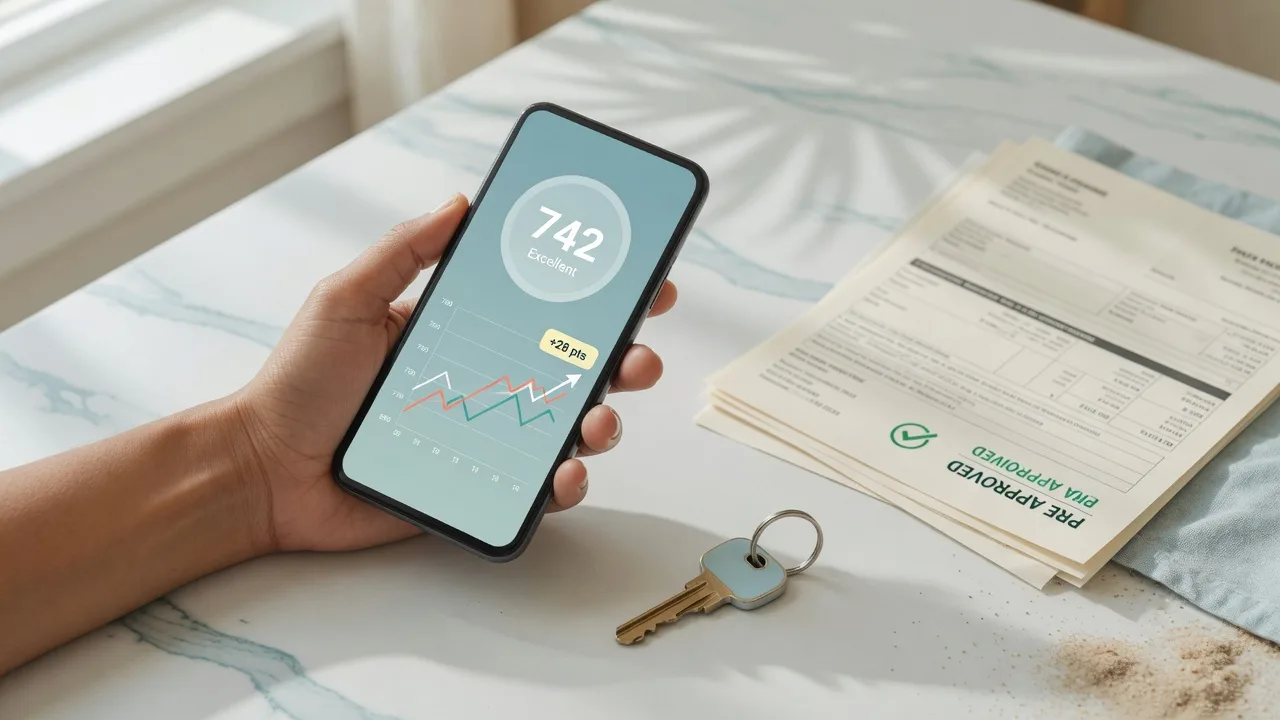
I often talk to Florida buyers who assume they are stuck with the credit score they have today. The truth is, your credit score is one of the few parts of your mortgage application you can actively improve in the months before you buy, and even a small improvement can save you thousands of dollars over the life of your loan.
In a rate environment where the 30-year fixed mortgage is averaging in the upper 6% range across Florida, the interest rate you are offered matters more than ever. That rate is driven in large part by your credit score. A higher score does not just mean approval. It means a lower rate, a lower monthly payment, and a smaller total interest bill.
Here is how credit scores affect Florida homebuyers in 2026, what score you should be targeting, and the practical steps you can take to raise your score before you start looking at homes.
What Credit Score Do You Need to Buy a Home in Florida?
The minimum score you need depends on the loan program. In 2026, the standards are fairly consistent with what most borrowers have seen in recent years:
- FHA loans: A minimum of 580 with the standard 3.5% down payment, or as low as 500 if you can put 10% down. Many FHA buyers qualify with scores in the low to mid-600s.
- Conventional loans: Fannie Mae and Freddie Mac generally require a minimum FICO of 620. You can qualify at 620, but you will pay higher rates and typically carry private mortgage insurance (PMI).
- VA loans: The VA does not set an official minimum, but most lenders look for a score around 580 to 620.
Here is the key number to remember: a FICO score of 740 or higher is where conventional mortgage pricing improves most noticeably, and 760 or higher typically unlocks the very best rates available. That is the difference between qualifying and getting the best possible deal.
For buyers in Miami-Dade, Broward, Palm Beach, the Florida Keys, and everywhere in between, that score gap can move your rate by a quarter point or more. On a $400,000 loan, that can mean hundreds of dollars per year and thousands over the life of the mortgage.
How Much Does a Better Credit Score Actually Save You?
Lenders group borrowers into credit tiers, and each tier carries its own pricing. A borrower in the low-600s on a conventional loan might be quoted a rate a full point or more above a borrower in the mid-700s, all else being equal.
To give you a concrete example: on a $350,000 30-year fixed loan, a one-point difference in your rate can change your monthly principal and interest payment by roughly $200. Over 30 years, that is tens of thousands of dollars in interest. Moving from the 620 tier to the 740 tier rarely happens overnight, but it does not require a perfect score to see meaningful savings.
The point is not that you must have a 760 score to buy. Plenty of great buyers close with scores in the 640 to 700 range. But if you have a few months before you are ready to buy, improving your score is one of the highest-return moves you can make.
Start by Checking All Three Credit Reports
Before you change anything, find out exactly where you stand. Pull your credit reports from all three major bureaus, Equifax, Experian, and TransUnion. You are entitled to a free report from each bureau every year.
Read through them carefully. Errors on credit reports are more common than most people realize, and they can drag your score down unfairly. An account that is not yours, a late payment that you never made, or a balance reported higher than it should be are all worth disputing with the bureau that reported it.
Mortgage lenders also look at your credit report from all three bureaus and typically use the middle score when they qualify you. That means fixing an error on even one bureau's report can move the score that actually counts.
The Steps That Move Your Score the Most
Your credit score is built from several factors, and they are not all equal. Payment history carries the most weight, followed by how much of your available credit you are using, known as your credit utilization. Here is where to focus your effort.
Pay Every Bill on Time
Payment history is the single biggest factor in your score. A single 30-day late payment can knock a significant number of points off your score and stay on your report for up to seven years. Set up autopay or calendar reminders for every bill, not just credit cards, but utilities, phone, and any installment loans too.
Pay Down Credit Card Balances
Credit utilization compares your card balances to your credit limits. Lenders like to see utilization at or below roughly 30%, and lower is generally better. If you are using most of your available credit, paying balances down is one of the fastest ways to see your score climb. Aim to keep revolving balances low, especially in the one to two months before you apply for a mortgage.
Ask for Higher Credit Limits
If your balances are paid down, requesting a credit limit increase on an existing card can lower your utilization without you spending anything. The key is to not use the extra room. A higher limit with the same balance means a lower utilization ratio, which can help your score.
Keep Old Accounts Open
The length of your credit history matters. Closing an old card, even one you no longer use, can shorten your average account age and raise your utilization by removing available credit. Unless a card carries an annual fee you want to avoid, it is often better to leave it open with a zero or low balance.
Avoid Opening New Accounts Before You Apply
This is the one I see trip up buyers most often. Financing a car, opening a new credit card, or taking on any new debt in the months before applying for a mortgage can hurt your score and raise your debt-to-income ratio. Retail store cards offered at checkout are a classic trap. If you are planning to buy a home, hold off on new credit until after closing.
How Long Does It Take to Raise Your Credit Score?
There is no single timeline, but some changes show up faster than others. Paying down high credit card balances can move your score within a billing cycle or two, because utilization is recalculated as balances are reported. Late payments and hard inquiries linger longer, so it is best to build good habits well before you apply.
A reasonable goal is to start three to six months before you plan to buy. That gives you time to correct errors, pay down balances, and let your new habits show up on your report. If your score is a long way from where you want it, working with a lender early lets you map out a realistic timeline instead of finding out about a problem at the last minute.
The Florida Factor: Don't Forget Your Full Payment Picture
Credit score is only part of the approval equation, and in Florida it is especially important to look at the whole monthly payment. Your mortgage payment includes principal and interest, but also property taxes, homeowners insurance, and any HOA or condo fees. In coastal areas like the Florida Keys, Islamorada, Key Largo, and parts of Miami-Dade, flood insurance can add to that number too.
A higher credit score gets you a better rate on the loan itself, but it does not change your insurance premium or your property tax bill. That is why, alongside improving your credit, it pays to get insurance quotes early and factor every housing cost into your budget.
When I work with buyers across Florida, I like to look at both pieces together: the rate your credit score earns you and the full payment picture for the home you are considering. Getting one without the other gives you an incomplete view of what you can truly afford.
Frequently Asked Questions
What credit score do I need to qualify for a mortgage in Florida?
FHA loans generally require a minimum of 580 with 3.5% down, conventional loans typically require 620, and VA loans commonly need 580 to 620 depending on the lender. A score of 740 or higher usually unlocks the best conventional rates.
Can I get a mortgage with a 620 credit score in 2026?
Yes, 620 is the typical minimum for a conventional loan, and you may also qualify for an FHA loan at that level. You will likely pay a higher rate and may carry PMI, but approval is achievable. Improving toward 740 can meaningfully lower your cost.
How much does a 100-point credit score difference affect my mortgage rate?
The exact impact varies by lender and loan program, but a 100-point difference can move your rate by a quarter point or more in some cases. On a $350,000 loan, that can translate to a different monthly payment and thousands in interest over the life of the loan.
How fast can I raise my credit score before buying a home?
Paying down high credit card balances can improve your score within a billing cycle or two. Correcting report errors and building a clean payment history take longer. Starting three to six months before you plan to buy gives you the best chance to see real improvement.
Should I open a new credit card to improve my score before buying?
Generally no. Opening new accounts shortly before a mortgage application can lower your score and raise your debt-to-income ratio. It is usually better to focus on paying down existing balances and on-time payments rather than adding new credit.
Does a credit score check by a lender hurt my score?
A mortgage inquiry may have a small, temporary effect on your score. Multiple mortgage inquiries within a short window are typically treated as one inquiry by scoring models, so shopping for rates with several lenders in a short period should not meaningfully hurt you.
The Bottom Line
Your credit score is not a fixed number you have to accept. It is something you can actively improve, and in today's Florida market, a higher score can be worth thousands of dollars in interest savings.
Start by checking all three credit reports, paying every bill on time, and paying down your credit card balances. Keep old accounts open, avoid new credit before you apply, and give yourself a few months to let those changes show up.
And remember, your credit score is only half the picture. A complete view of what you can afford in Florida also depends on your full monthly housing payment, including taxes, insurance, and HOA dues. If you want to know where your credit stands and what it means for your buying power, I can help you map out a clear plan. No pressure, no sales pitch, just an honest look at the numbers.
A higher credit score does not just mean approval. It means a lower rate, a lower monthly payment, and thousands saved over the life of your loan.
Austin Edwards, Mortgage Loan Originator

Austin Edwards
Mortgage Loan Originator · NMLS #2639747
Austin helps Florida homebuyers understand their options and make confident mortgage decisions. He believes an educated buyer makes better financial choices.
More Resources
Looking for more mortgage guidance? Check out what credit score you need to buy a home or the first-time homebuyer guide for Florida. Browse the blog index for the latest articles, or reach out to Austin directly with your questions.
Have a question? Ask Austin.
Wondering where your credit stands or how to raise it before you buy? Austin can pull your numbers, explain your options, and help you build a realistic plan. No commitment, no sales pitch. Just a straight answer.
Ask Austin a QuestionReady to see what you can qualify for?
Austin will help you understand your credit picture and your full Florida housing budget so you can move forward with confidence. No pressure, just a clear picture of where you stand.